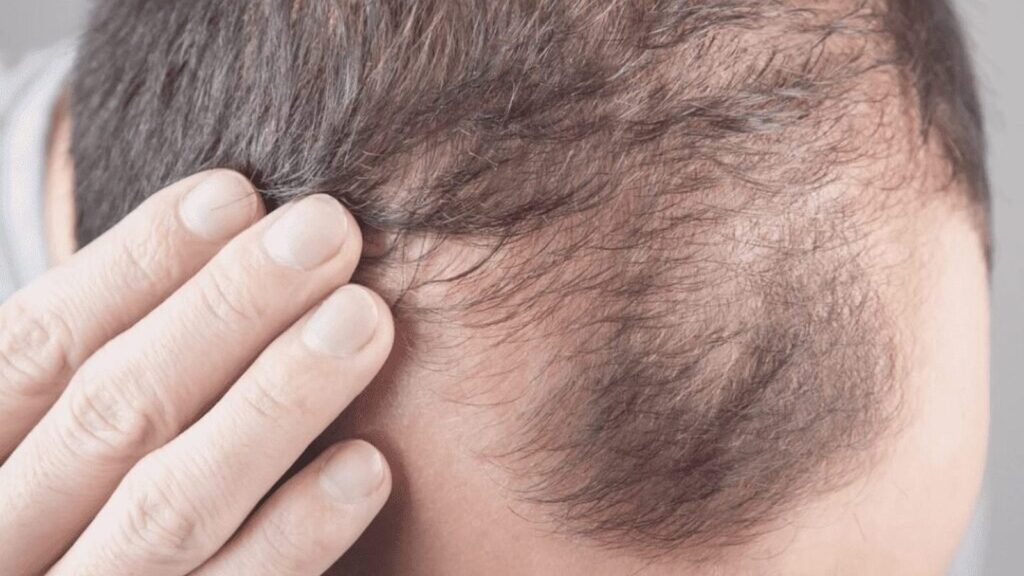
Not for the transplanted hair itself. Grafts come from androgen-resistant follicles at the back of the scalp and keep that resistance after they are moved. Surgeons often suggest finasteride to slow thinning of the native hair around the grafts, but it is optional, carries MHRA safety warnings, and is a decision to make with your GP or prescriber.
Key takeaways
- Transplanted hair keeps the androgen resistance of the donor area, so the grafts do not need finasteride to survive.
- Finasteride is used to protect the native hair around the grafts, which can keep thinning with pattern hair loss.
- The MHRA warns of depression, suicidal thoughts and sexual dysfunction with finasteride, strengthened its warnings in May 2026, and says sexual problems have sometimes persisted after stopping.
- Topical finasteride, topical or low-dose oral minoxidil and, in future, clascoterone are alternatives to discuss with a prescriber.
- This article is general information. Any medicine decision belongs with your GP or prescriber.
Why do surgeons recommend finasteride after a hair transplant?
Because a transplant does not stop pattern hair loss. It moves follicles into thinning areas, but the native hair around them can keep thinning, and finasteride is one of the main medicines used to slow that process.
The NHS hair loss page names finasteride and minoxidil as the main treatments for male pattern baldness. It also says they do not work for everyone, only work for as long as they are used, and are not all available on the NHS. The Primary Care Dermatology Society guidance lists finasteride 1 mg a day as a treatment for men and warns of a small risk of altered libido, erectile dysfunction and ejaculation disorders, which can persist once treatment is stopped.
The reasoning after surgery is about the long-term look. If you have grafts along a new hairline while the hair behind them keeps thinning, you can end up with an island of transplanted hair. Slowing native loss helps the result stay in proportion as you age. A 2018 review of hair transplant complications also suggests that minoxidil after surgery, possibly with oral finasteride, may help reduce the risk of shock loss and speed recovery, though it gives no trial data for that use.
None of this makes finasteride compulsory. Many people have a transplant without it. What matters is that your surgeon plans for the hair loss you are likely to have in future, which is one reason graft numbers are worked out conservatively. Our guide to how many grafts you need explains why the donor area is a limited supply.
What has the MHRA warned about finasteride?
The MHRA, the UK medicines regulator, warns that finasteride is associated with low mood, depression, suicidal thoughts and sexual dysfunction. It introduced patient alert cards in 2024 and strengthened the warnings again in May 2026.
The key points from the regulator’s announcements:
- April 2024: the MHRA announced a patient alert card for finasteride packs. It said that in some cases sexual dysfunction has persisted after people stopped taking finasteride. Up to 5 April 2024 it had received 281 Yellow Card reports of depressed mood disorders and suicidal or self-injurious behaviour, and 426 reports of sexual dysfunction, linked to finasteride 1 mg and 5 mg.
- May 2026: the MHRA strengthened the product information to say that sexual dysfunction may contribute to mood disorders, and that sexual dysfunction has also been reported with and without mood changes. It added a precautionary warning to dutasteride, a related medicine.
- What to do: the May 2026 Drug Safety Update tells patients on finasteride 1 mg to stop immediately if they develop depression or suicidal thoughts and to contact their doctor. It advises contacting a healthcare professional about sexual side effects such as reduced sex drive, erection problems or ejaculation problems, and calling 999 in an emergency.
The European Medicines Agency reached a similar view. Its 2025 review confirmed suicidal ideation as a side effect of finasteride 1 mg and 5 mg tablets, and concluded that the benefits still outweigh the risks for the approved uses.
Report suspected side effects of any medicine to the MHRA through the Yellow Card scheme. One practical point from the PCDS guidance: finasteride lowers PSA, a blood test used to check the prostate, so the true level may be about twice the reported figure. Tell any doctor who orders a PSA test that you take it.
Do transplanted hairs need finasteride?
No. Hair taken from the back and sides of the scalp is resistant to the hormone that drives pattern hair loss, and it keeps that resistance in its new position.
The StatPearls chapter on hair transplantation puts it simply: because occipital hairs are resistant to androgens, transplanted hairs keep their donor characteristics. This is the principle that makes hair transplants last.
So the honest answer to “do I need finasteride after a hair transplant?” depends on your native hair, not your grafts:
| Your situation | Why medicine might matter | Question to ask your prescriber |
|---|---|---|
| Young, with loss still progressing | More native hair is at risk over the coming years | Is a medicine worth it to slow further loss? |
| Older, with loss that has been stable for years | Less native hair is likely to be lost | Is the benefit large enough to justify the side-effect risk? |
| Transplant mainly to the hairline, thinning behind | Gaps can open up between grafts and thinning native hair | Could treatment help keep the result in proportion? |
| History of low mood or depression | The MHRA warnings on mood and suicidal thoughts are especially relevant | Is finasteride right for me at all, or is an alternative safer? |
Is topical finasteride safer than tablets?
It exposes the body to far less of the drug, but the main trial lasted only 24 weeks, so treat it as a promising option to use under a prescriber’s care rather than a proven safer choice.
The main trial is a 2022 phase III study in European men. Of 458 men randomised, those using a finasteride spray gained more hair in the target area at 24 weeks than those on placebo (an adjusted mean change of 20.2 hairs against 6.7). The effect was similar to finasteride tablets, but peak blood levels of finasteride were more than 100 times lower, and blood DHT fell by 34.5% compared with 55.6% on tablets. Adverse events did not differ meaningfully from placebo.
On mood, the EMA’s 2025 review found no evidence linking suicidal ideation to finasteride skin sprays, and no new warning was added to their product information. That is reassuring, but it is not the same as proof of safety, and the trial lasted 24 weeks. Be wary of sprays sold online without a prescription: you cannot be sure what is in them.
What about oral or topical minoxidil?
Minoxidil is the other main hair loss medicine. It works differently from finasteride, so it is often discussed as an alternative or an addition.
- Topical minoxidil is applied to the scalp. The PCDS guidance says it works by slowing hair shedding and that the best results are seen between 6 and 12 months. It only works while you keep using it.
- Low-dose oral minoxidil is a tablet. The PCDS describes its use for hair loss and lists unwanted hair growth elsewhere on the body as the commonest side effect, followed by a fast heartbeat and dizziness. It is a medicine for a prescriber to assess and monitor, not something to start on your own.
The 2018 complications review mentions starting minoxidil within two weeks of surgery to help recovery from shock loss. If you want to use minoxidil around your transplant, ask the operating doctor when it is safe to restart on healing skin, and ask your prescriber whether it suits you.
What new treatments are coming, such as clascoterone?
Clascoterone 5% solution, a topical medicine that blocks androgen receptors in the scalp, is the closest new option, but it was not approved for hair loss anywhere as of 2026.
According to Healio’s report of the phase III results, the SCALP 1 and SCALP 2 trials enrolled 1,465 men with mild to moderate pattern hair loss at 51 centres in the US and Europe. Men who responded at six months and continued for a full year had 2.39 times more hair growth in the target area than men switched to an inactive solution, and safety was similar to the inactive solution. The company plans to file for approval in the US and Europe, with the filing expected by early 2027. The full data have not yet appeared in a peer-reviewed journal, and the 12-month comparison only included men who had already responded.
How this fits with a hair transplant in Antalya
We do not prescribe long-term hair loss medicine through this blog, and we suggest you discuss finasteride or minoxidil with your GP or a UK prescriber who can monitor you. What we can do is plan surgery that respects the hair loss you may still have.
A plan starts with four photos on WhatsApp (front, top, crown and back). The doctor reviews them and sends a written plan and price, and you meet the operating doctor for a consultation and hairline drawing on day 1 before anything is done. Mention any hair loss medicine you take or have stopped, and any side effects you had. To get a sense of graft numbers and cost first, try the graft and price estimator or read about FUE in Antalya, where all-inclusive packages range from €1,599 to €6,000 depending on grafts and package.
Some patients also ask about PRP, which is included in our Premium package alongside surgery. It is not a replacement for a conversation with your prescriber about medicine.
Frequently asked questions
Will my transplanted hair fall out if I do not take finasteride?
Transplanted hair comes from the back and sides of the scalp, where follicles are resistant to androgens, and it keeps those donor characteristics after it is moved. So the grafts themselves do not depend on finasteride. What finasteride may protect is the native hair around them, which can keep thinning with pattern hair loss and leave the transplanted area looking isolated over time.
Can I start finasteride after my hair transplant?
That is a decision for your GP or prescriber, not for a clinic blog. Finasteride is a prescription medicine, and the MHRA asks prescribers to explain its psychiatric and sexual side effects and to give patients an alert card. Tell your prescriber you have had a transplant and mention any history of low mood or depression before you start.
What should I do if finasteride affects my mood?
The MHRA advises people taking finasteride 1 mg to stop immediately and contact their doctor if they develop depression or suicidal thoughts. If you have thoughts of harming yourself and feel you cannot keep yourself safe, call 999. You can also report suspected side effects through the MHRA Yellow Card scheme.
Is topical finasteride available in the UK?
Ask your prescriber what they can offer. A 2022 European trial found a finasteride spray improved hair count compared with placebo, with much lower levels of the drug in the blood than tablets, and the EMA found no evidence linking the sprays to suicidal thoughts. That is encouraging, but it is not a reason to buy unregulated products online.
Is clascoterone available yet?
Not for hair loss. Clascoterone 5% solution for male pattern hair loss was still an investigational treatment in 2026. The company behind it reported positive 12-month phase III results in April 2026 and said it planned to file in the US and Europe by early 2027. A 1% cream with the same ingredient is already approved for acne in some countries.
Sources
- MHRA strengthens safety warnings for finasteride and dutasteride, MHRA, GOV.UK, 11 May 2026
- Finasteride and dutasteride: updated safety warnings for psychiatric side effects and sexual dysfunction (Drug Safety Update), MHRA, GOV.UK, 11 May 2026
- Men on finasteride asked to stay vigilant for possible psychiatric and sexual side effects, MHRA, GOV.UK, 29 April 2024
- Finasteride- and dutasteride-containing medicinal products: referral, European Medicines Agency, EC decision 22 August 2025
- Goldin J, Zito PM, Raggio BS. Hair Transplantation. StatPearls, StatPearls Publishing (via PubMed), updated 2 August 2025
- Alopecia: male and female pattern alopecia, Primary Care Dermatology Society, updated 16 March 2025
- Hair loss, NHS, reviewed 24 January 2024
- Piraccini BM et al. Efficacy and safety of topical finasteride spray solution for male androgenetic alopecia: a phase III, randomized, controlled clinical trial. J Eur Acad Dermatol Venereol 2022;36(2):286-294, JEADV (via PubMed), February 2022
- Kerure AS, Patwardhan N. Complications in hair transplantation. J Cutan Aesthet Surg 2018;11(4):182-189, Journal of Cutaneous and Aesthetic Surgery (via PubMed Central), 2018
- Male pattern hair loss drug regrows hair up to 1 year without plateau, Healio, 22 April 2026
Written by our editorial team and checked against the sources listed, following our editorial policy. Last updated 30 October 2026. This article is general information and does not replace advice from a doctor who has examined you. Medically reviewed by