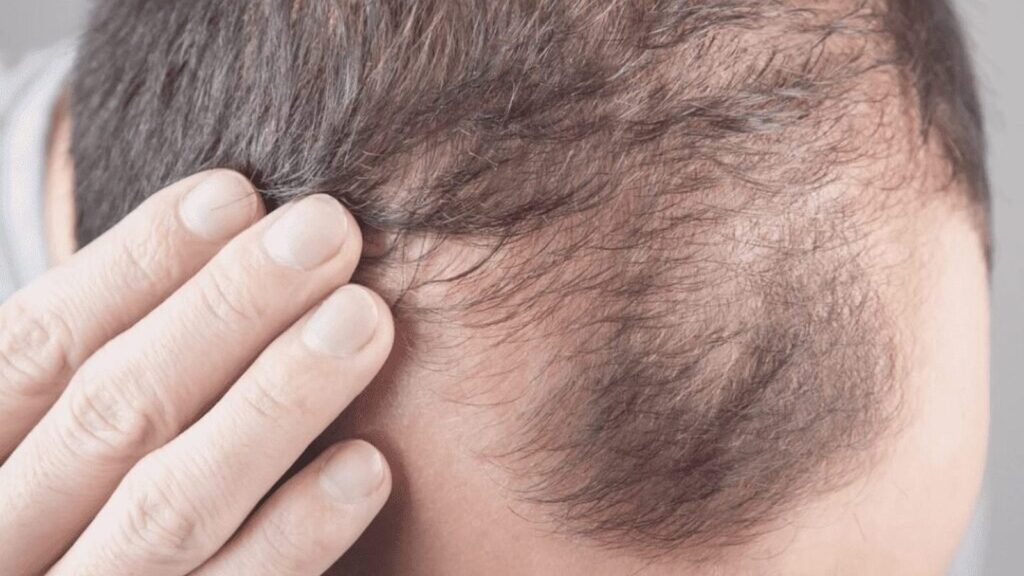
Almost never for male or female pattern hair loss. NHS commissioning policies treat hair transplants for pattern baldness as cosmetic and do not routinely fund them. Surgery is considered only in exceptional cases, such as hair loss caused by trauma, burns or previous surgery. Most people who want a transplant pay privately, in the UK or abroad.
Key takeaways
- Hair transplants for male pattern baldness are not routinely commissioned on the NHS, and one 2025 policy says this applies regardless of gender.
- Exceptions are narrow: hair loss after previous surgery or trauma, including burns, and reconstruction after cancer.
- Finasteride for hair loss is only available on private prescription. Minoxidil is not recommended for routine NHS prescribing.
- See your GP first to find out what is causing your hair loss, and to check whether some wigs are available on the NHS for you.
- NHS GPs and A&E see complications, but elective revisions after surgery abroad are not normally NHS-funded, so the clinic’s own aftercare matters.
Can you get a hair transplant on the NHS?
Not for pattern baldness. In England, local NHS commissioners decide what is funded. Their policies class hair transplants for male pattern baldness as a procedure that is not routinely commissioned, and the NHS website says many hair loss treatments may not be available on the NHS.
A clear example is the policy of NHS Cheshire and Merseyside Integrated Care Board, last reviewed in May 2025. It states that surgical correction of male pattern baldness, such as hair transplantation or scalp reduction, is not routinely commissioned. Non-surgical treatments for male pattern baldness are not routinely commissioned either. The policy explains why: surgical correction of hair loss should be available on the NHS only in exceptional cases, and hair transplantation for male pattern baldness will not be allowed on the NHS, regardless of gender. It adds that the British Association of Dermatologists takes the same approach.
The NHS website lists hair transplants among the treatments for hair loss but warns that some of these treatments may not be available on the NHS. It also notes that pattern baldness is permanent and that no treatment is 100% effective. Local policies differ in their wording. If you live elsewhere in the UK or in Ireland, ask your GP which rules apply to you.
Are there exceptions, such as burns or scarring?
Yes, but they are narrow. The NHS may consider surgery to restore hair lost because of previous surgery or trauma, including burns. It may also do so as part of reconstruction after cancer. A specialist decides whether you meet the criteria.
The Cheshire and Merseyside policy says surgical correction of hair loss for other reasons will only be considered when it is due to previous surgery or trauma, including burns. Its core eligibility criteria also cover reconstructive surgery after cancer or trauma, and some congenital conditions of the face and skull. Hair transplantation is used for these problems in specialist practice. A 2025 review describes it as a treatment for end-stage scarring alopecia and for corrective work after trauma or surgery, as well as for pattern hair loss.
| Type of hair loss | NHS surgery? | What usually happens |
|---|---|---|
| Male pattern baldness | Not routinely commissioned | GP assessment; medication is usually private; surgery is private |
| Female pattern hair loss | Not routinely commissioned | GP assessment and advice; topical minoxidil is an option |
| Alopecia areata (patchy loss) | Surgery not routinely commissioned | GP or dermatology care; many cases recover without treatment |
| Hair loss after burns, trauma or previous surgery | May be considered | Referral to a specialist, who checks the criteria |
| Reconstruction after cancer | Covered by core eligibility criteria | Managed by the treating specialist team |
The policy gives a reason why surgery for alopecia areata is not offered: spontaneous recovery is possible in up to 50% of cases. Your GP can tell you which kind of hair loss you have.
What hair loss treatments can my GP prescribe?
Your GP can find out what is causing your hair loss, treat underlying conditions and refer you if needed. For pattern baldness, the main medicines are finasteride and minoxidil. Finasteride for hair loss is only available on private prescription, and minoxidil is not recommended for routine NHS prescribing.
The NHS advises seeing a GP if you are worried about your hair loss, and getting an idea of the cause before going to a commercial hair clinic. The NHS also notes that hair loss caused by a medical condition usually stops or grows back once the condition is treated. That is worth knowing before you spend money on surgery.
| Treatment | On the NHS? | What to know |
|---|---|---|
| Finasteride tablets (men) | No, for hair loss | The NHS says it is only available on private prescription and not on the NHS; improvement is expected after 3 to 6 months |
| Minoxidil (men and women) | Not routinely | Local policy says minoxidil is not recommended for routine prescribing at NHS expense; best results are seen between 6 and 12 months |
| Steroid injections or creams | Sometimes | Used for bald patches such as alopecia areata |
| Wigs | Some | The NHS says some wigs are available on the NHS, though you may have to pay unless you qualify for help |
Finasteride and minoxidil only work while you keep using them, and women should not take finasteride. The Primary Care Dermatology Society says up to 90% of men may benefit from finasteride. In May 2026 the MHRA strengthened its warnings about mood and sexual side effects, so read our article on finasteride after a hair transplant before you start.
How much does a private hair transplant cost in the UK?
There is no NHS tariff or official average price for a private hair transplant. Each clinic sets its own fees, usually based on the number of grafts. Ask for a written, itemised quote, and check who will operate and what aftercare is included.
The Primary Care Dermatology Society says plainly that treatments are very expensive. It adds that outcomes are variable and depend largely on the surgeon’s skill and experience. We do not quote average UK prices here, because published figures vary widely between sources. A fair comparison looks at the same things in every quote:
- the number of grafts (follicular units), not hairs;
- whether a doctor performs the surgical steps, and whether you meet that doctor before paying;
- what is included: medication, aftercare products, follow-up visits and how long follow-up lasts;
- what happens, and who pays, if there is a complication.
At our clinic in Antalya, packages are all-inclusive and priced as ranges that depend on grafts and package. FUE is €1,599 to €6,000, DHI €1,690 to €6,400 and Sapphire FUE €1,999 to €6,400. Each package covers the surgery, local anaesthesia and sedation, hotel, VIP transfers, medication, shampoo and lotion, and 12 months of follow-up. You can estimate your grafts and price online. Our guide to hair transplant costs in Turkey for UK patients covers flights and extras. For the wider decision, see Turkey or the UK.
Will the NHS treat complications from surgery abroad?
NHS GPs and A&E departments do see and treat people with complications after surgery abroad. But there is no consistent NHS policy on follow-up care after cosmetic surgery abroad, and elective corrective procedures are not normally NHS-funded.
A 2013 survey by the British Association of Plastic, Reconstructive and Aesthetic Surgeons (BAPRAS) found no clear or consistent policy across NHS providers or commissioners for treating these patients. It said that elective revision procedures would not normally be funded by the NHS, and that 88% of the patients surveyed had been referred by NHS GPs or emergency departments. More recently, BAAPS said the NHS often bears the burden of correcting complications when patients return to the UK.
The NHS’s own advice on surgery abroad explains the gap. In the UK it is the surgeon’s job to provide follow-up treatment, while overseas clinics may not provide follow-up treatment, or not to the same standard. It also warns that travel insurance does not normally cover you if things go wrong in surgery. The Foreign Office says it knows of 7 British nationals who died in Turkey in 2025 following medical procedures. It suggests checking a provider against the Ministry of Health’s approved list on the HealthTurkiye website.
That is why the clinic’s own aftercare should be part of your decision. We follow the December 2023 minimum guidelines from BAHRS, BAAPS, BAPRAS and TSPRAS. You meet the doctor who will operate, a doctor performs the surgical steps, and you have time to review the recommendation before paying. The guidelines also expect systems for complications during and outside working hours. Follow-up lasts 12 months with Standard and 18 months with Premium, and UK patients can reach us on WhatsApp at +44 7988 487 251.
A plan starts with four photos on WhatsApp: front, top, crown and back. The doctor reviews them and sends a written plan and price, with no deposit needed. You can read more about the clinic or contact us with questions first.
Frequently asked questions
Can I get finasteride on the NHS for hair loss?
No. The NHS website says finasteride for hair loss is only available on a private prescription, so you pay the full cost. It treats male pattern baldness and is generally not recommended for women. Improvement is expected after 3 to 6 months, and it only works while you take it. In May 2026 the MHRA strengthened its warnings about mood and sexual side effects.
Can my GP refer me for a hair transplant?
Only in exceptional cases, such as hair loss caused by burns, trauma or previous surgery, or as part of reconstruction after cancer. For male or female pattern baldness, NHS policies do not routinely fund surgery. Your GP can still help by finding the cause of your hair loss and checking for conditions that need treatment first.
Is alopecia areata treated on the NHS?
Your GP or a dermatologist can assess patchy hair loss and may offer treatments such as steroid creams or injections, although not every treatment is available everywhere. Surgery for alopecia areata is not routinely commissioned. One NHS policy notes that spontaneous recovery is possible in up to 50% of cases, so many people regrow hair without surgery.
Can I get a wig on the NHS?
Some wigs are available on the NHS, but you may have to pay unless you qualify for financial help with health costs. The NHS website says synthetic wigs last about 6 to 9 months, and real-hair wigs about 3 to 4 years. Ask your GP or hospital team how wig provision works in your area.
Will the NHS fix a bad hair transplant done abroad?
Not usually. NHS GPs and A&E departments do see people with complications after surgery abroad, but elective revision procedures are not normally NHS-funded. A BAPRAS survey also found no consistent NHS policy for these patients. This is why you should choose a clinic that offers follow-up, deals with complications, and lets you meet the operating doctor.
Sources
- CMICB_Clin052: Correction of hair loss: alopecia areata and alopecia androgenetica (clinical commissioning policy, version 0.5), NHS Cheshire and Merseyside Integrated Care Board, May 2025
- Hair loss, NHS, reviewed 24 January 2024
- Queen D, Avram MR. Hair transplantation: state of the art. Dermatol Surg 2025;51(9):874-881, Dermatologic Surgery (PubMed), 2025
- About finasteride, NHS, reviewed 2 August 2023
- Common questions about finasteride, NHS, reviewed 2 August 2023
- Alopecia: male and female pattern alopecia, Primary Care Dermatology Society, updated 16 March 2025
- MHRA strengthens safety warnings for finasteride and dutasteride, Medicines and Healthcare products Regulatory Agency (GOV.UK), 11 May 2026
- Cosmetic tourism and the burden on the NHS, BAPRAS, 7 February 2013
- UK cosmetic surgery audit reports 16% decrease in procedures amid economic downturn and increase in complications from overseas procedures, BAAPS, 5 April 2024
- Cosmetic surgery abroad, NHS, reviewed 14 December 2022
- Turkey travel advice: health, Foreign, Commonwealth and Development Office (GOV.UK), accessed 30 October 2026
- UK and Turkish medical associations unite to issue minimum guidelines for hair transplant surgery, BAAPS (with BAHRS, BAPRAS and TSPRAS), 13 December 2023
Written by our editorial team and checked against the sources listed, following our editorial policy. Last updated 30 October 2026. This article is general information and does not replace advice from a doctor who has examined you. Medically reviewed by