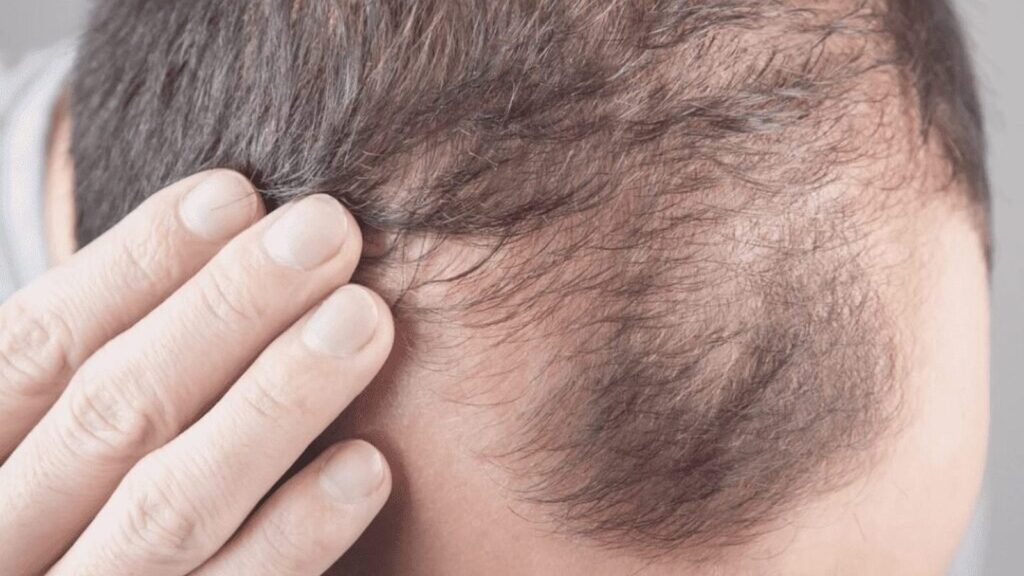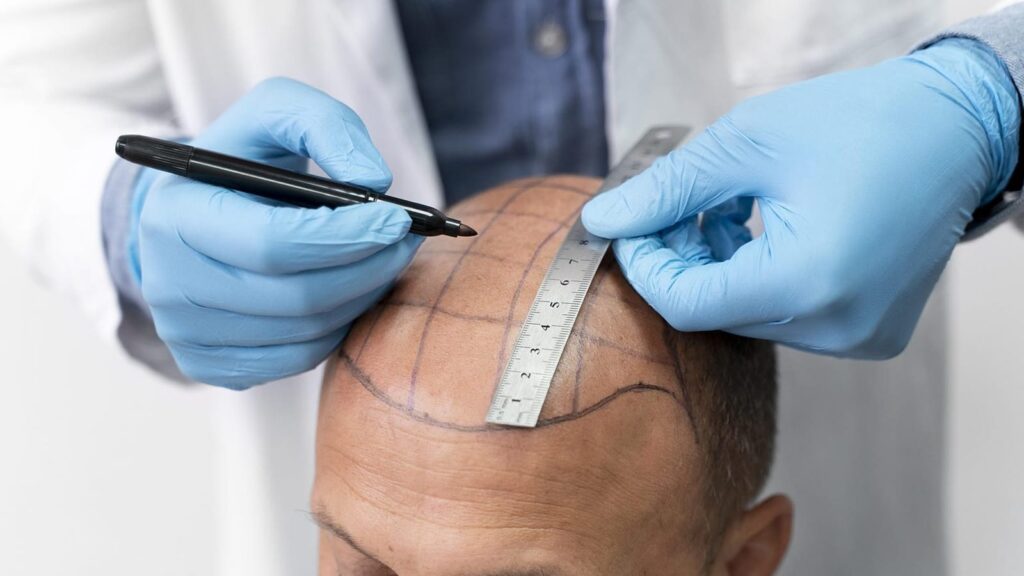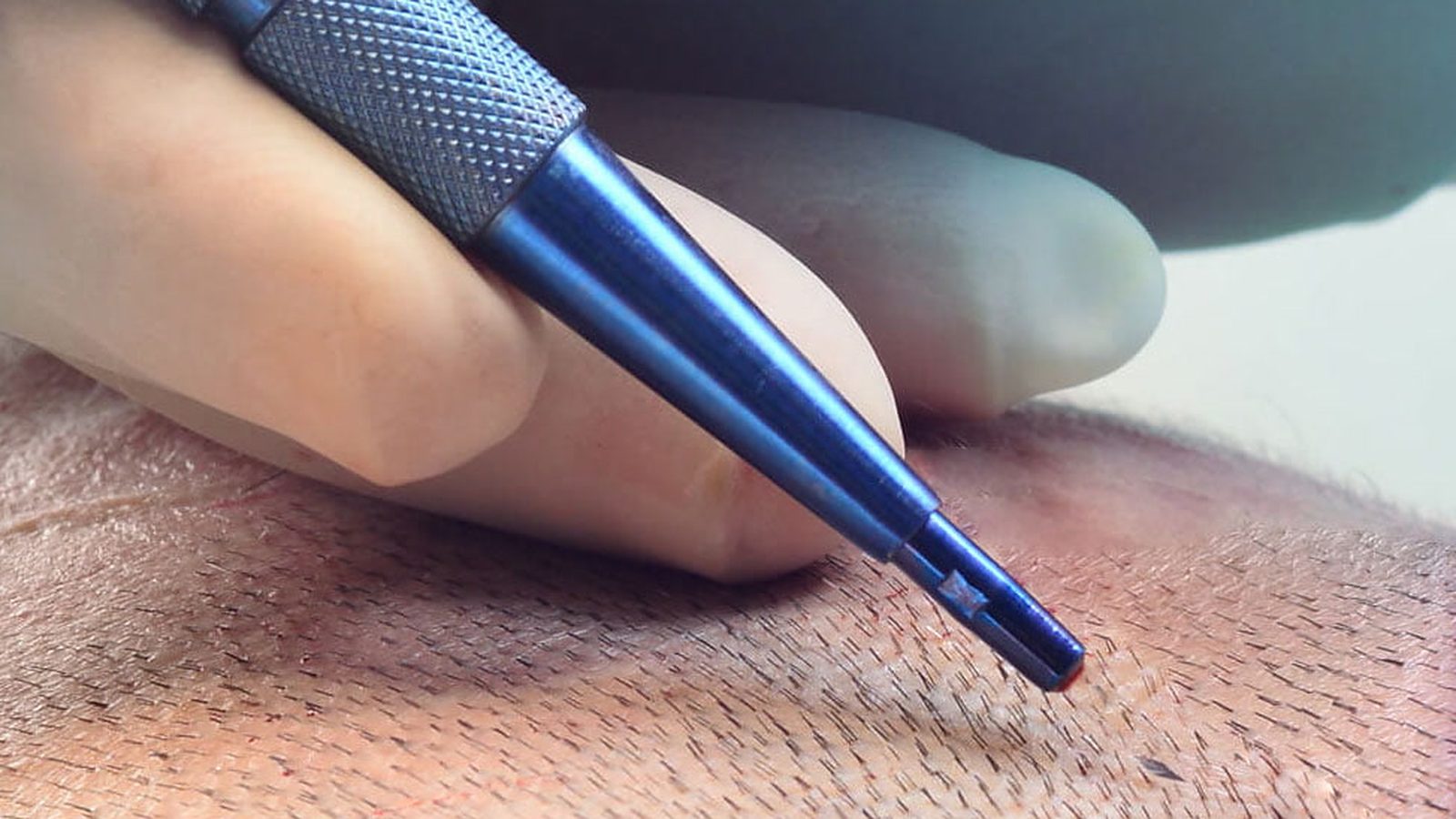
FUE, DHI and Sapphire FUE all take grafts one by one from the back and sides of your head. They differ in how the grafts go in. Standard FUE opens channels with fine steel blades, Sapphire FUE uses sapphire-tipped blades, and DHI uses a Choi implanter pen that opens the channel and places the graft in one movement.
Key takeaways
- Extraction is the same in all three. Only the way channels are opened and grafts placed changes.
- We found no randomised trial showing that one technique gives better long-term growth. A 2025 multicentre study found similar graft survival with both placement methods.
- DHI can be done without shaving. FUE and Sapphire FUE usually need the head shaved.
- Our all-inclusive packages: FUE €1,599 to €6,000, DHI €1,690 to €6,400, Sapphire FUE €1,999 to €6,400.
- The doctor recommends a technique after seeing your photos. Skill, planning and graft handling matter more than the name.
What is the difference between FUE, DHI and Sapphire FUE?
All three are versions of follicular unit excision (FUE). Follicular units are punched out one at a time from the donor area. The difference is the implantation stage: either channels are opened first and grafts placed afterwards, or each graft is placed at the moment its channel is made.
A 2021 review in the Journal of the American Academy of Dermatology describes the main ways surgeons implant grafts: premade sites, stick-and-place, and implanter tools. The marketing names used in Turkey map onto these methods:
- FUE (classic): the surgeon opens all the recipient channels first with fine steel blades, then the grafts are placed into them with forceps.
- Sapphire FUE: the same sequence, but the channels are opened with blades tipped with sapphire instead of steel.
- DHI (Direct Hair Implantation): each graft is loaded into a Choi implanter pen, which makes the channel and places the graft in one movement. The Choi implanter was introduced in 1992, and a 2024 review notes that its key advantage was creating the incision and placing the follicular unit in one step.
| FUE | Sapphire FUE | DHI | |
|---|---|---|---|
| How grafts are taken | One by one with a fine punch | One by one with a fine punch | One by one with a fine punch |
| How channels are opened | Fine steel blade, before placement | Sapphire-tipped blade, before placement | Choi pen opens and places in one step |
| Shaving | Usually shaved | Usually shaved | Possible without shaving |
| Often chosen for | Larger areas, front and crown | Dense, fine placement | Hairlines and unshaven cases |
| Our package price | €1,599 to €6,000 | €1,999 to €6,400 | €1,690 to €6,400 |
The older alternative, strip harvesting or FUT, removes a strip of scalp and, as the ISHRS notes, leaves a linear scar in the donor area. A 2025 review of five years of research describes FUE and strip harvesting as the state-of-the-art methods, alongside new devices for extracting and inserting follicular units. None of the three labels is outdated. Each is a choice of instrument within the same operation.
Which technique gives the most density?
Density depends mostly on how many grafts your donor area can give and how the doctor spreads them. The placement method matters less. The best comparative evidence we found points to a small density advantage for placing grafts as each site is made, with no difference in graft survival.
In a 2025 retrospective study of 191 FUE patients across four hospitals in China, surgeons compared premade incisions (95 patients) with stick-and-place (96 patients). The researchers found:
- higher graft density and higher patient satisfaction in the stick-and-place group;
- faster implantation with premade incisions (about 719 against 554 follicular units per hour, on the study’s measure);
- no significant difference in graft survival or complication rates.
Stick-and-place is the closest standard method to how a DHI pen works. Still, this study was not a trial of branded DHI, and it was not randomised. Treat it as a useful signal, not proof.
How grafts are handled matters at least as much as the tool. In a laboratory study, human FUE grafts were implanted into mice. Intact grafts grew in 71% of cases, compared with 51%, 44% and 13% for grafts with minor paring, bulb or fracture injuries. Careful extraction and gentle handling protect the result whichever pen or blade is used.
Do I need to shave my head?
For classic FUE and Sapphire FUE, usually yes. DHI can be done with or without shaving, which is why it is the usual choice for women and for men who need to keep longer hair.
The ISHRS says that in most cases FUE is done with a shaved donor area. Non-shaved FUE is possible in selected cases but takes more time and is typically priced higher. With unshaven DHI, grafts go between your existing hair, which hides the area while it heals. Our women’s hair transplant page explains how only small, hidden strips underneath are trimmed. If you want to keep your length with an extraction-first approach, ask about unshaven FUE.
Unshaven work takes longer per graft, so for a large area your doctor may suggest shaving. If staying unshaven matters to you, say so in your first message so the plan reflects it.
Which technique heals fastest?
In everyday practice, recovery is very similar for all three. Crusts fall away within about 10 days, shedding follows at weeks 2 to 6, and new growth begins around months 3 to 4. Claims that sapphire blades heal faster rest on limited and conflicting evidence.
The sapphire claim usually traces back to one paper. A 2021 study used geometry to estimate the wound surface made by different blade shapes. It concluded that a 30-degree sapphire blade would cause the least injury. It measured no healing in patients. A 2023 split-scalp study of 12 men pointed the other way. Using laser Doppler flowmetry, it found that handmade razor blades caused significantly less vascular damage than a sapphire blade.
With so little evidence, we do not promise faster healing with any technique. What does speed up recovery is a sensible graft number, gentle handling and following your aftercare. Our day-by-day recovery timeline shows what to expect from the first wash onwards.
Why does DHI cost more?
DHI uses specialised implanter pens and tips sized to your hair, and placing grafts one at a time with a pen is slower than placing them into channels opened in advance. Price still depends far more on graft numbers and your package than on the technique.
On the speed point, the 2025 study above found implantation was about 30% faster with premade incisions than with stick-and-place. At our clinic, a DHI procedure uses at least two pens and 10 to 12 tips chosen for the thickness of your hair. Here is how our all-inclusive ranges compare:
| Technique | Package price range | What moves the price within the range |
|---|---|---|
| FUE | €1,599 to €6,000 | Number of grafts; Standard or Premium package |
| DHI | €1,690 to €6,400 | Number of grafts; shaved or unshaven; package |
| Sapphire FUE | €1,999 to €6,400 | Number of grafts; Standard or Premium package |
Every package includes the surgery, local anaesthesia and sedation, hotel, VIP airport and clinic transfers, medication, shampoo and lotion, and 12 months of follow-up. Premium adds PRP, a vitamin kit, a 5-star hotel, a personal assistant, mesotherapy or Oxycure, and 18 months of follow-up. Your price is confirmed in writing after a photo assessment, and you can get an instant estimate first. For the full picture, including flights, see our guide to hair transplant costs for UK patients.
Which technique is best for my hair loss?
The best technique is the one your doctor recommends after examining your donor area, the size of the area to cover and whether you need to stay unshaven. Under the joint UK and Turkish guidelines, that recommendation should come from the doctor who will operate.
The December 2023 minimum guidelines from BAHRS, BAAPS, BAPRAS and TSPRAS say patients should meet the operating doctor, who should recommend the harvesting method, the graft number and the hairline design. They also say patients should be told explicitly if a technician will do any part of the procedure. This matters for technique choice. The 2024 review notes that one reason implanters spread in Western practice was the ability to delegate graft placement, and the ISHRS says placement is most often done by trained staff. So ask who will place your grafts, whichever technique you choose. The concern is real: in the ISHRS 2025 census, 59% of members said black-market clinics operate in their city.
| Your situation | Often recommended | Why |
|---|---|---|
| Large area across the front and crown | FUE or Sapphire FUE | Channels opened in advance make it efficient to place many grafts evenly |
| Hairline or temple refinement | DHI | Fine control of the angle and direction of each graft |
| You need to keep your hair long | Unshaven DHI | Grafts go between existing hairs |
| Female pattern thinning | Unshaven DHI | Keeps length and hides healing |
| Advanced loss, Norwood 6 or 7 | Decided by donor supply | The limit is how many grafts can be taken safely, not the tool |
To find out which suits you, send four photos on WhatsApp: front, top, crown and back. The doctor reviews them and sends a written plan with the technique, graft range and price. There is no deposit to get one. If you are unsure how many grafts you need, our Norwood graft guide explains the numbers.
Frequently asked questions
Is DHI better than FUE?
Not in any proven, general sense. Both are forms of follicular unit excision, and we found no randomised trial showing better long-term growth with either. A 2025 study found similar graft survival with both placement approaches and slightly higher density with stick-and-place. DHI suits hairlines and unshaven cases. FUE is efficient for large areas. Your doctor recommends one after reviewing your photos.
Is Sapphire FUE worth the extra cost?
Sapphire FUE opens the channels with sapphire-tipped blades instead of steel. The evidence that sapphire heals faster or grows more hair is limited and mixed: one 2021 paper was a geometric model, and a 2023 study of 12 men found less vascular damage with razor blades. Choose Sapphire FUE on your doctor’s advice, not on marketing claims.
Is FUE the same as FUT?
No. FUT, or strip harvesting, removes a thin strip of scalp from the back of the head, which is then divided into grafts and leaves a linear scar. FUE takes follicular units one at a time with a small punch, leaving tiny dot scars instead. Reviews describe both as state-of-the-art methods. FUE, Sapphire FUE and DHI are all FUE-based techniques.
Does the technique change how many grafts I need?
No. The number of grafts depends on the size of the area to cover, the density you want, and how many grafts your donor area can safely give. The technique only changes how those grafts are placed. Our estimator gives a typical range for each Norwood stage, and the doctor confirms the final number from your photos.
Can I choose the technique myself?
You can tell us your preference, especially if you need to stay unshaven. But the recommendation should come from the doctor who will operate, after looking at your donor area and the area to cover. The joint UK and Turkish guidelines say this, and if a technique does not suit your case, we will explain why in your written plan.
Sources
- Jimenez F, Vogel JE, Avram M. CME article Part II. Hair transplantation: surgical technique. J Am Acad Dermatol 2021;85(4):818-829, Journal of the American Academy of Dermatology (PubMed), October 2021
- Speranzini M, Souza SEG. Advancements in graft placement techniques. Facial Plast Surg 2024;40(2):223-233, Facial Plastic Surgery (PubMed), April 2024
- FUT (follicular unit transplantation), International Society of Hair Restoration Surgery, undated, accessed 30 October 2026
- Queen D, Avram MR. Hair transplantation: state of the art. Dermatol Surg 2025;51(9):874-881, Dermatologic Surgery (PubMed), 2025
- Zhao Y, et al. Premade incisions vs. stick and place: a multicenter retrospective comparison of hair transplantation outcomes in China. Aesthetic Plast Surg 2025;49(13):3597-3604, Aesthetic Plastic Surgery (PubMed), 2025
- Kwack MH, et al. Comparative graft survival study of follicular unit excision grafts with or without minor injury. Dermatol Surg 2021;47(5):e191-e194, Dermatologic Surgery (PubMed), May 2021
- FUE: what is it?, International Society of Hair Restoration Surgery, undated, accessed 30 October 2026
- Ahmad M, Ismail M. Effect of different shapes of recipient site creation micro-blades at varying angles and wound injury. J Cosmet Dermatol 2021;20(11):3610-3615, Journal of Cosmetic Dermatology (PubMed), 2021
- Balik O. Determination of scalp vascular topography by laser Doppler flowmetry and comparison of vascular damage by different blades in hair transplantation. J Craniofac Surg 2023;34(8):e803-e806, Journal of Craniofacial Surgery (PubMed), 2023
- UK and Turkish medical associations unite to issue minimum guidelines for hair transplant surgery, BAAPS (with BAHRS, BAPRAS and TSPRAS), 13 December 2023
- ISHRS 2025 Practice Census results, International Society of Hair Restoration Surgery, 13 May 2025
Written by our editorial team and checked against the sources listed, following our editorial policy. Last updated 30 October 2026. This article is general information and does not replace advice from a doctor who has examined you. Medically reviewed by