A hair transplant in Turkey can be safe when it takes place in a licensed clinic, is planned and performed by a doctor you have met, and comes with proper aftercare. The risks rise in unlicensed “black-market” clinics where technicians operate. UK and Turkish surgeons’ associations publish a checklist you can use before you pay anything.
Key takeaways
- No surgery is risk-free, but serious complications from hair transplants are rare with experienced teams; minor problems such as folliculitis are more common.
- The Foreign Office says it is aware of 7 British nationals who died in Turkey in 2025 after medical procedures of all kinds.
- Meet the doctor who will operate, have time to review the plan before paying, and get in writing who makes the incisions and implants the grafts.
- Turkey’s Ministry of Health publishes lists of facilities authorised to treat international patients, so you can check before you book.
- Agree how complications will be handled, during your stay and after you fly home, before you pay.
Is it safe to have a hair transplant in Turkey?
For most patients treated by an experienced, properly supervised team, yes: serious complications are uncommon. But no surgery is risk-free, in the UK or abroad, and the clinic you choose makes the biggest difference to your risk.
A 2024 scoping review of the research on hair restoration surgery concluded that serious complications are rare in the hands of experienced providers. The more common problems are minor and usually temporary, as the table shows.
| Complication | What it is | What the research reports |
|---|---|---|
| Folliculitis | Inflamed hair follicles, like small spots, during regrowth | One of the most frequently reported problems after FUE; most cases settle without lasting effects |
| Infection | Bacterial infection of the donor or recipient area | Below 1% in most FUE studies |
| Shock loss | Temporary shedding of existing hair near the grafts | Reported in 0.15% to 15% of cases, usually with regrowth |
| Skin necrosis | Loss of skin in the recipient area from poor blood supply | Rare but potentially severe; risk rises with smoking, very dense packing and very large sessions |
The news has also reported deaths. In August 2025 BAAPS reported the death of a 38-year-old British man who had travelled to Turkey for a hair transplant; UK press reports said he fell ill and was taken to hospital, and that Turkish police interviewed clinic staff; no cause of death was given. The Foreign Office’s Turkey travel advice says it is aware of 7 British nationals having died in Turkey in 2025 following medical procedures. That figure covers all kinds of medical treatment, not only hair transplants, and the page does not say how many British people were treated, so it cannot be turned into a risk percentage. It does underline why medical screening, a doctor-led team and emergency readiness matter.
What do UK surgeons’ associations recommend?
In December 2023, the British Association of Hair Restoration Surgery (BAHRS), BAAPS, BAPRAS and the Turkish Society of Plastic, Reconstructive and Aesthetic Surgeons (TSPRAS) published joint minimum guidelines for UK patients considering a hair transplant in Turkey. In short: meet the operating doctor, take time before paying, and know who does each step.
The joint guidelines ask UK patients to check five things:
- Consultation. Meet the doctor who will perform your surgery. That doctor should recommend the harvesting method, the number of grafts or hairs and the hairline design.
- Time to decide. Have two weeks to consider the doctor’s recommendation and the consent form before you make any payment.
- Who operates. Be told at the first consultation if a doctor will not make the skin incisions or implant the hair, including whether a technician will do it.
- Aftercare. The operating doctor should assess your progress and final result, and there should be a clear complaints process.
- Complications. The clinic should have systems to deal with complications in and out of hours, including necrosis, infection, cysts and altered sensation, and the supply of antibiotics.
Our clinic follows these guidelines: you meet the operating doctor, the doctor performs the surgical steps, and you have time to review your written plan before you pay. The NHS gives similar advice for any surgery abroad, including not paying for a surgeon you have not met.
What is a black-market hair transplant clinic?
It is a clinic where unlicensed or unsupervised technicians carry out surgery that should be done by a doctor, often at a very low price. The International Society of Hair Restoration Surgery (ISHRS) reports that they are becoming more common.
In its 2025 practice census, the ISHRS reported that 59% of members said there are black-market hair transplant clinics in their cities, up from 51% in 2021, and described them as places where technicians illegally perform hair transplant surgery. Members also reported that the average share of repair cases linked to a previous black-market transplant was 10%, up from 6% in 2021. The ISHRS position is that any procedure that cuts the scalp is a surgical act and must be performed by a licensed, trained physician.
Warning signs worth taking seriously:
- No named doctor, or a doctor you only “meet” briefly on the day while others do the surgery.
- Pressure to pay a deposit before a doctor has assessed you or before you have a written plan.
- Promises of very high graft numbers regardless of your donor area. A 2026 review notes that many authors recommend taking no more than 10% to 20% of donor follicular unit density in one session.
- Guaranteed results or “no risk” claims.
- No clear answer on who to contact, or what happens, if something goes wrong after you fly home.
How do I check a clinic is licensed in Turkey?
Ask for the clinic’s Ministry of Health licence and its health tourism authorisation, then check it against the Ministry’s published lists. Also ask for the operating doctor’s full name and registration details.
Turkey requires healthcare facilities and intermediaries that serve international patients to hold an International Health Tourism Authorization Certificate. The Ministry of Health’s Health Tourism Department publishes lists of authorised hospitals, medical centres, private practices and other providers. A regulation published in the Official Gazette on 26 April 2025 replaced the 2017 rules and tightened requirements on the agencies that arrange treatment for foreign patients.
A draft of the new rules reported in April 2025 proposed that complication and travel health insurance would become obligatory for medical tourists; ask any clinic whether complication cover is included and what it pays for. The ISHRS also advises patients to ask directly for a name, a medical license number, and their credentials.
The Foreign Office travel advice also reminds readers that private companies have a financial interest in booking your treatment, so do your own checks rather than relying on marketing.
Who should actually perform my surgery?
A licensed doctor should perform the surgical steps: harvesting grafts, making the recipient incisions and implanting the grafts. Assistants can support the doctor, but you should know who does what.
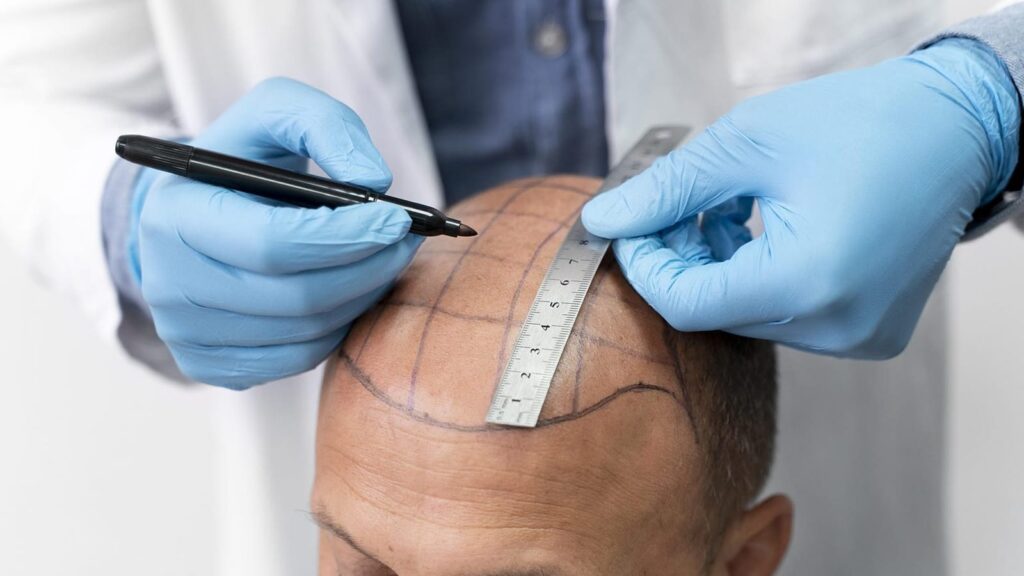
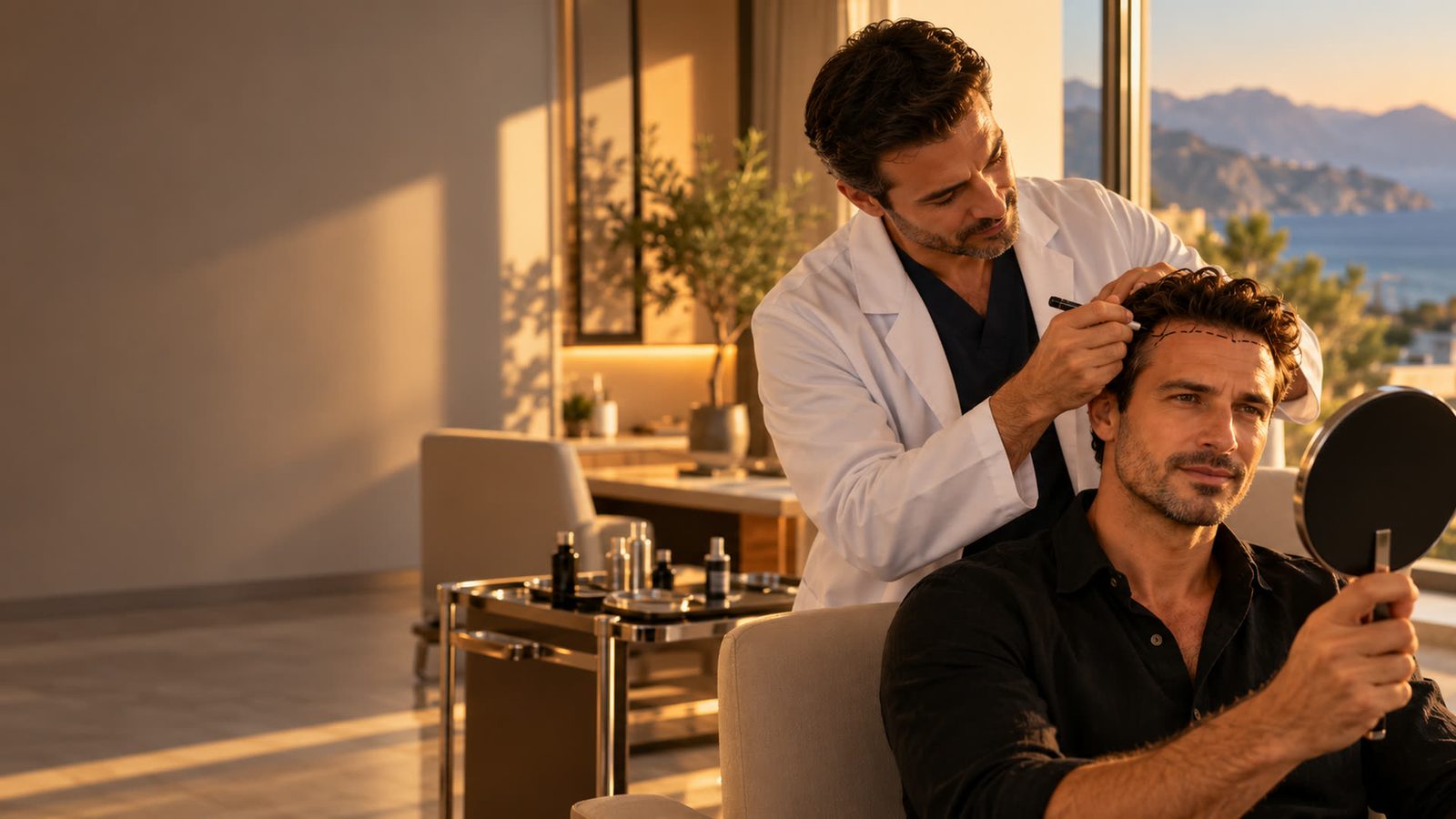
The joint UK and Turkish guidelines state that complications are reduced when the surgical steps are performed by a doctor rather than a technician. At our clinic you meet that doctor on day 1, agree the hairline drawing together, and the doctor performs the surgical steps on day 2. Whichever technique you choose, whether FUE, DHI or Sapphire FUE, the same rule applies.
What questions should I ask before booking?
Ask questions that test who operates, how you are protected and what happens afterwards, and get the answers in writing.
- What is the full name of the doctor who will operate, and can I meet them before the procedure?
- Which steps will the doctor perform personally, and will a technician make incisions or implant grafts?
- Is the clinic authorised by the Ministry of Health to treat international patients?
- How many grafts do you recommend, and how much donor hair will I have left for the future?
- Will I have time to review the plan and consent form before I pay?
- Who do I contact out of hours, during my stay and after I fly home?
- How long does follow-up last, and who reviews my progress photos?
- What is your complaints process?
At our clinic, the first step is to send four photos on WhatsApp (front, top, crown and back). A doctor reviews them and you receive a written plan and price, with no deposit to get it. For prices, see our guide to hair transplant costs in Turkey or use the graft and price estimator.
What should I do if something goes wrong?
Contact the clinic straight away with clear photos, and get urgent local medical help for signs of a serious problem such as spreading redness, fever, severe pain or darkening skin. Keep records of everything.
- During your stay: tell the clinic team immediately.
- After you fly home: send photos to the clinic and follow its advice. For anything urgent, use NHS 111, your GP or, in an emergency, 999.
- Insurance: check your policy early. The Foreign Office warns that standard travel insurance does not normally cover you if you travelled abroad for elective surgery, and that it cannot usually help with disputes about care or costs.
- Complaints: use the clinic’s complaints process and keep copies of your plan, consent form, receipts and messages.
- A disappointing result: wait until the grafts have fully grown in before judging, as hair grows slowly after a transplant. If a repair is needed, see our guides to fixing a botched hair transplant and hair transplant repair.
How we research medical content is set out in our editorial policy.
Frequently asked questions
Are hair transplant clinics in Turkey regulated?
Yes. Healthcare facilities are licensed by Turkey’s Ministry of Health, and those treating international patients need an International Health Tourism Authorization Certificate. The Ministry publishes lists of authorised hospitals, medical centres and private practices, and a 2025 regulation tightened the rules for agencies that arrange treatment. Unlicensed black-market clinics operate outside these rules, which is why checking matters.
Is Antalya safer than Istanbul for a hair transplant?
The city does not decide how safe your surgery is. What matters is whether the clinic is licensed, whether you meet the doctor who will operate, who performs the surgical steps and how complications are handled. Our guide comparing Antalya and Istanbul covers flights, recovery and prices if you are choosing between the two.
Should I avoid the cheapest clinics?
Price alone does not tell you how safe a clinic is, but a price far below others for a large graft number deserves questions. Ask who operates, how many grafts your donor area can safely give and what follow-up includes. The ISHRS reports that black-market clinics, where technicians operate, are becoming more common.
Can I meet the doctor who will operate before I pay?
At our clinic, yes. A doctor first reviews your photos and you receive a written plan and price with no deposit. You then meet the operating doctor in person on day 1 for your consultation and hairline drawing, before the procedure on day 2, and you have time to review the plan before paying.
Does travel insurance cover complications from a hair transplant?
Usually not. The Foreign Office says standard travel insurance does not normally cover you if you travelled abroad for elective surgery. Look for specialist cover for the procedure and its complications, read the exclusions, and ask the clinic in writing how it handles complications during your stay and after you return to the UK.
Sources
- A Scoping Review on Complications in Modern Hair Transplantation: More than Just Splitting Hairs (Liu RH et al.), Aesthetic Plastic Surgery (PubMed), 2025, online 23 August 2024
- Complications in follicular unit excision hair transplantation: current evidence and practical approaches (Romera de Blas C et al.), Frontiers in Medicine (PubMed Central), 3 February 2026
- Another tragic death after surgery abroad, British Association of Aesthetic Plastic Surgeons (BAAPS), 1 August 2025
- Brit tourist dies in Turkey after undergoing hair transplant, LBC, 31 July 2025
- Turkey travel advice: Health, Foreign, Commonwealth and Development Office, GOV.UK, travel advice updated 27 October 2026
- UK and Turkish Medical Associations Unite to Issue Minimum Guidelines for Hair Transplant Surgery, British Association of Aesthetic Plastic Surgeons (BAAPS), 13 December 2023
- Cosmetic surgery abroad, NHS, reviewed 14 December 2022
- New Survey Finds Younger Adults, More Women Seeking Treatment for Hair Loss (2025 Practice Census), International Society of Hair Restoration Surgery (ISHRS), 13 May 2025
- Fight the Fight: black-market hair transplants, International Society of Hair Restoration Surgery (ISHRS), undated
- Certificated health service providers, HealthTürkiye (USHAŞ), undated
- Healthcare providers authorized by the Ministry, Republic of Türkiye Ministry of Health, Health Tourism Department, 20 August 2026
- Major changes to Turkey’s medical tourism sector: 2025 regulatory update, The Legal 500, 2025
- Türkiye moves to tighten regulations to boost health tourism, Hürriyet Daily News, 1 April 2025
- In hospital abroad: going abroad for medical treatment and planned elective surgery, Foreign, Commonwealth and Development Office, GOV.UK, updated 7 June 2024
Written by our editorial team and checked against the sources listed, following our editorial policy. Last updated 30 October 2026. This article is general information and does not replace advice from a doctor who has examined you. Medically reviewed by