Often, yes, at least in part. Unnatural hairlines, misangled grafts, low density and some scarring can usually be improved by removing or adding grafts, or with scalp micropigmentation. How far a repair can go depends on how much donor hair is left. An over-harvested donor area is the hardest problem, and some repairs need more than one procedure.
Key takeaways
- Common signs of a botched transplant are a hairline that is too low or too straight, grafts at the wrong angle, a pluggy or low-density look, and a thin or patchy donor area.
- The ISHRS reports that repairs of previous black-market transplants averaged 10% of its members’ cases in 2024, up from 6% in 2021.
- Repair can remove or redistribute grafts, add density, or camouflage scarring with scalp micropigmentation, but it is limited by the donor hair you have left.
- A cosmetic repair is best planned once the first transplant has grown out, which on our timeline means about 12 months. Infection or skin damage needs care straight away.
- To avoid a second bad experience, check the doctor, who does each surgical step, and the complaints process against the BAHRS, BAAPS, BAPRAS and TSPRAS guidelines.
What does a botched hair transplant look like?
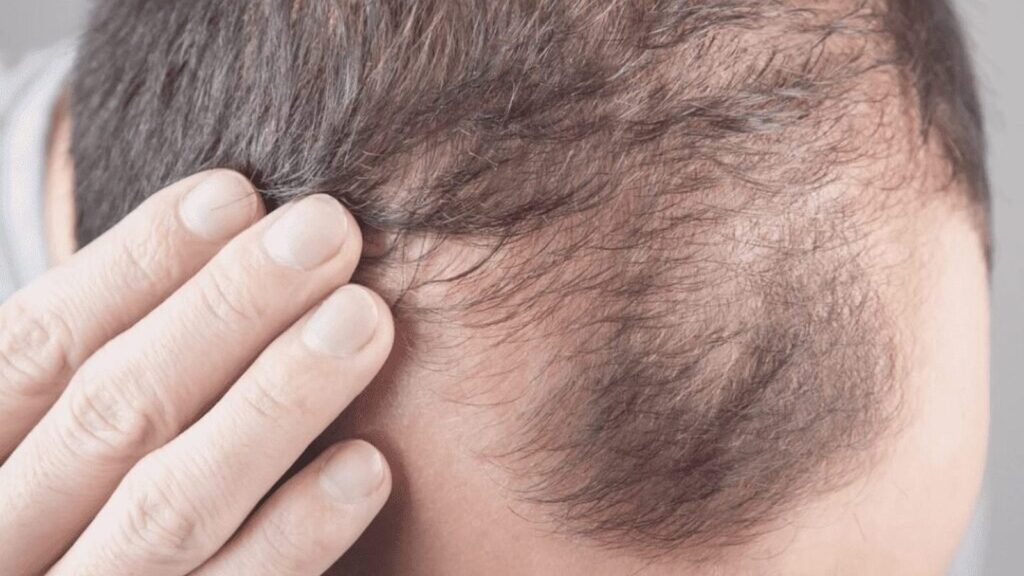
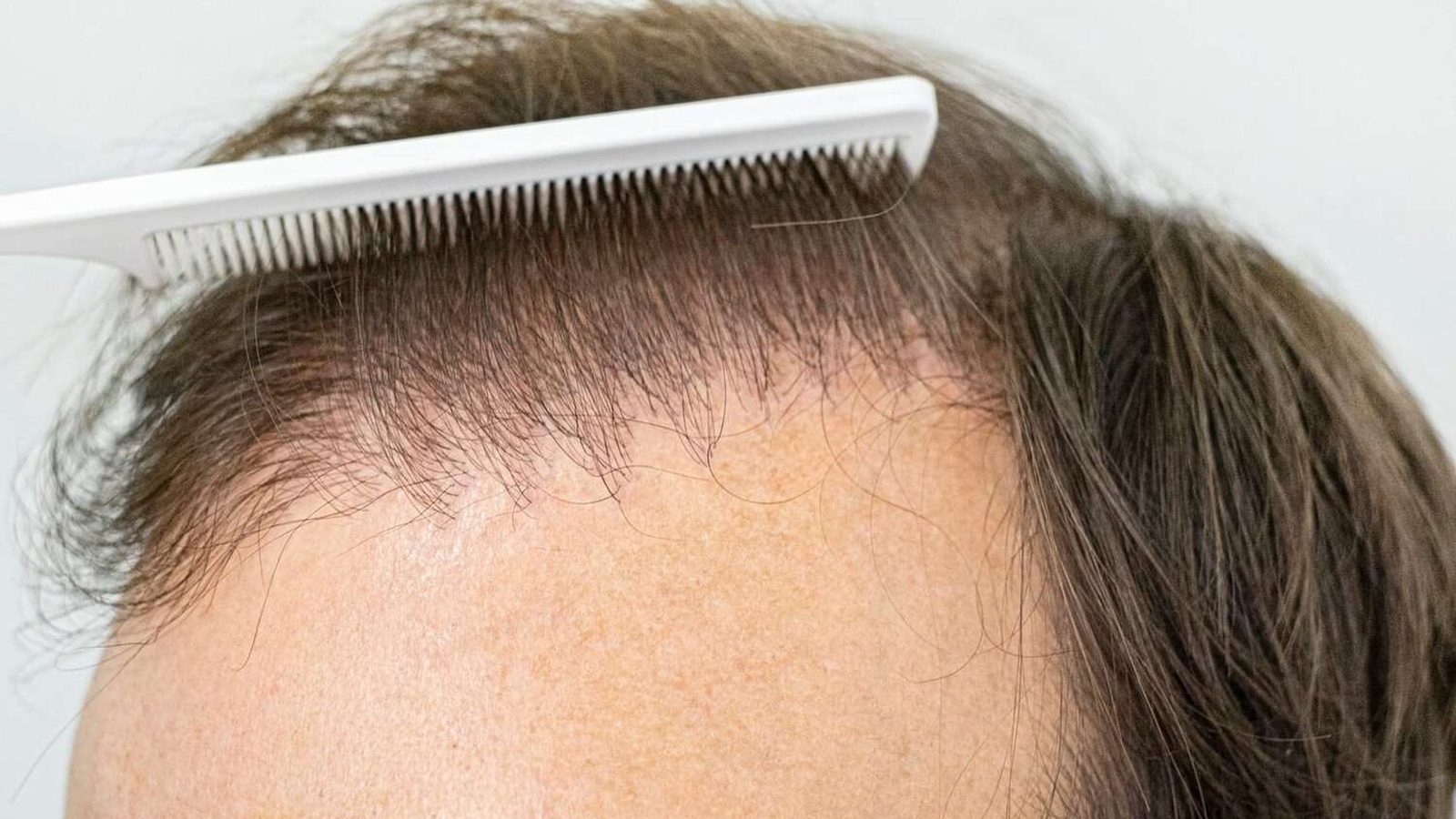
A botched transplant usually looks unnatural rather than simply thin. The tell-tale signs are a hairline in the wrong place or shape, hair growing in the wrong direction, visible clumps or plugs, and a donor area at the back of the head that looks moth-eaten.
The ISHRS guide to revision and repair lists the problems its members see most often, and a 2018 review of hair transplant complications adds detail on the donor side:
| Problem | What it looks like | Usual cause |
|---|---|---|
| Unnatural hairline | Too low, too straight, or blunted at the temples | Poor design for the patient’s age and future hair loss |
| Wrong angle or direction | Hair sticking up or growing against the natural flow | Grafts placed at the wrong angle |
| Pluggy or cornrow look | Visible clumps or rows of hair | Larger grafts in the front row, or older large-graft methods |
| Low density or poor growth | Thin, see-through result after 12 months | Damaged or dried-out grafts, poor donor hair, or patient factors |
| Over-harvested donor area | Thin, patchy or moth-eaten back and sides | Too many grafts taken, or taken unevenly |
| Scarring | A wide strip scar, or many visible pinpoint scars | Poor surgical technique or healing |
Before you decide your transplant has failed, check the timing. Shedding in weeks 2 to 6 and patchy early growth are normal. Our article on shedding and shock loss explains what to expect in the first months.
Why do hair transplants fail?
Most poor results come down to who did the surgery and how carefully the grafts were handled. Planning that ignores future hair loss, rough harvesting and grafts left to dry out are the usual causes, and some patient factors add risk.
The 2018 review lists the main reasons for poor growth: grafts damaged while being cut or placed, grafts that dry out before implantation, and poor-quality donor hair that should have been spotted before surgery. It names heavy smoking, diabetes and severe sun damage to the scalp as patient factors. It describes an unnatural appearance as a complication of poor design and surgical execution.
The ISHRS also points to people. Its revision guide says low-quality work by inexperienced providers is still being done, and that some doctors rely on non-licensed technicians to do most or all of the work. Its Fight the Fight campaign is blunt: any procedure that cuts the scalp is a surgical act and must be performed by a licensed, trained physician.
The scale of the problem is growing. In the ISHRS 2025 Practice Census, repairs of previous black-market transplants averaged 10% of members’ cases in 2024, up from 6% in 2021, and 59% of members reported black-market clinics operating in their city, up from 51%.
A transplant can also look worse over time even when the surgery was fine, because pattern hair loss continues around the grafts. The ISHRS notes that patients may lose more hair from genetic hair loss and need more surgery. That is a planning issue rather than a failed graft, and it is one reason medical treatment is sometimes discussed after surgery, as covered in our guide to finasteride after a hair transplant.
Can an over-harvested donor area be fixed?
It can be improved, but not fully undone. Follicles that have been removed do not grow back, so repair is about making the area look better and using the hair that is left wisely.
The 2018 review warns that over-harvesting can permanently damage the donor area, leaving thinning and patchy hair loss, and links it to aggressive and uneven extraction. It advises marking out the safe donor zone before surgery and not extracting more than about one in four follicular units from an area.
The options a repair surgeon may discuss include:
- Redistributing what is left. Careful, even extraction from areas that still have reserve, if there are any.
- Body or beard hair. The ISHRS notes that FUE lets surgeons use beard, chest or abdominal hair as donor hair in selected patients.
- Scalp micropigmentation (SMP). The ISHRS describes SMP as a permanent or semi-permanent option using specialised tattoo pigment. It can soften the look of thin or scarred areas.
- Accepting a more conservative goal. When donor hair is scarce, a natural, lower-density result is often wiser than chasing full coverage.
Donor hair matters because of how transplants work. The StatPearls chapter on hair transplantation explains that hair from the back of the scalp resists the hormones behind pattern hair loss and keeps that quality when moved. That supply is limited and cannot be replaced, which is why our guide to how many grafts you need stresses planning for the long term.
How long should I wait before a repair?
For a cosmetic repair, wait until the first transplant has grown out. On our timeline most of the result shows at 12 months and keeps maturing to 18, so a full assessment is usually only possible after about a year.
Planning a repair earlier risks treating hair that was still on its way. New growth only starts at months 3 to 4, and density builds over months 6 to 9. Waiting also lets scars settle and gives the doctor a fair view of what grew and what did not.
The exception is anything medical. The joint BAHRS, BAAPS, BAPRAS and TSPRAS guidelines list skin necrosis, infection, cysts and abnormal sensation (dysaesthesia) as complications a clinic should be ready to manage in and out of hours. If you have any of these, contact the original clinic and see your GP straight away. Do not wait 12 months.
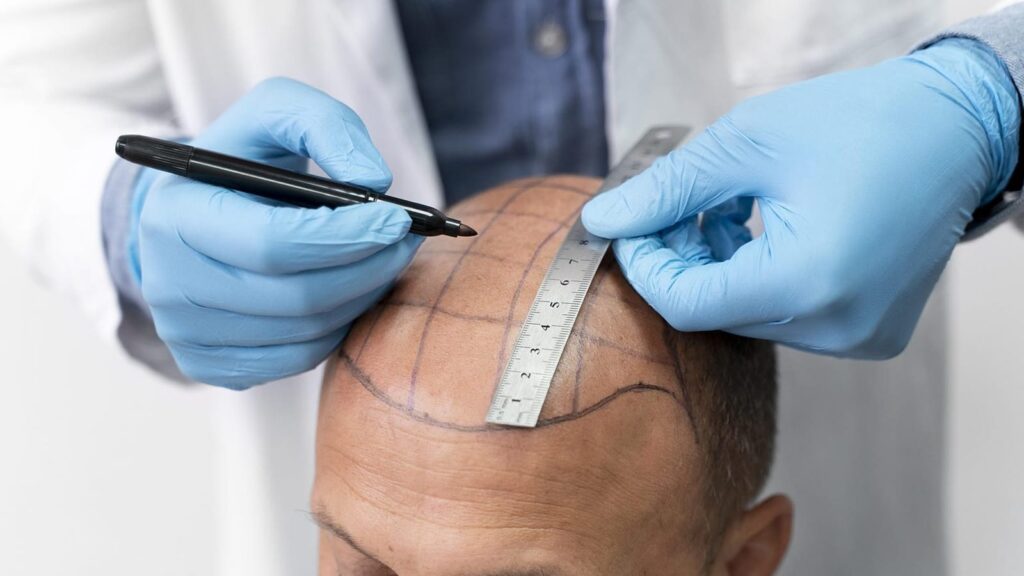
While you wait, gather what you will need: your records from the first clinic, including graft numbers, technique and the date, and dated photos taken in the same light every few months.
How much does hair transplant repair cost?
There is no fixed price for a repair, because each one is different. The cost depends on what needs doing, how many grafts are needed and available, and whether more than one stage is needed.
If you would like us to assess a repair, the process is the same as for any plan: you send four photos on WhatsApp (front, top, crown and back), the doctor reviews them, and you receive a written plan and price. There is no deposit to get a plan. As a reference point, our all-inclusive packages range from €1,599 to €6,000 for FUE, €1,690 to €6,400 for DHI and €1,999 to €6,400 for Sapphire FUE, depending on grafts and package. You can get an early idea from the graft and price estimator, but a repair always needs the doctor’s review because donor supply, not just the size of the area, drives the plan.
Every package includes the surgery, local anaesthesia and sedation, hotel, VIP transfers, medication, shampoo and lotion, and 12 months of follow-up (18 months with Premium). If the first procedure left you short of donor hair, the doctor may tell you that only a limited improvement is realistic. That honesty is worth more than a promise. Mention that you are asking about hair transplant repair when you send your photos, and if you need to keep your hair long for a small correction, ask whether an unshaven FUE approach suits you.
How do I avoid the same mistake twice?
Check the doctor, not the advert. Insist on meeting the person who will operate, find out exactly who does each surgical step, and take time to review the plan before paying.
The minimum guidelines published in December 2023 by BAHRS, BAAPS, BAPRAS and TSPRAS give you a ready-made checklist. We follow them, and you should expect any clinic you consider to do the same:
- A consultation with the doctor who will operate, who recommends the harvesting method, number of grafts and hairline design.
- Time to decide. The guidelines suggest two weeks to consider the recommendation and consent form before making any payment.
- Clarity on who does what, including whether a doctor or a technician will make the incisions and implant the grafts.
- Follow-up by the operating doctor, and a clear process for complaints.
- A system for complications during and outside working hours, including access to antibiotics.
The ISHRS adds simple questions to ask: the surgeon’s name, their medical licence number and their credentials. A legitimate surgeon, it says, is licensed, registered and reachable. The PCDS guidance also notes that hair transplant outcomes depend to a large extent on the skill and experience of the surgeon.
Red flags include a price that depends on paying a deposit before you have spoken to a doctor, vague answers about who operates, very large graft numbers promised in one session without a look at your donor area, and pressure to book quickly. For a wider checklist, see our guide to whether a hair transplant in Turkey is safe, or read how we work. When you are ready, send your photos to +44 7988 487 251 on WhatsApp.
Frequently asked questions
Can a hairline that is too low be fixed?
Often it can be improved. The ISHRS describes repair techniques that remove some or all of the unnatural grafts, sometimes followed by more grafting to refine the line. A hairline that is too low can be harder to correct than one that is too high, because grafts may need to be removed rather than simply added. A doctor needs to examine you to say what is realistic.
How many procedures does a hair transplant repair take?
It depends on the problem and the donor hair left. The ISHRS says it may take many procedures to reach a more natural result. A small correction to a hairline may be simpler than rebuilding density after poor growth, especially if the donor area was over-harvested. Ask for a written, staged plan so you know what each step is meant to achieve.
Can scalp micropigmentation hide a damaged donor area?
It can help. The ISHRS describes scalp micropigmentation (SMP) as a permanent or semi-permanent option that uses specialised tattoo pigment to create the look of density. It does not add hair, but it can soften the appearance of thin, patchy or scarred areas, on its own or alongside grafting.
Is it safe to go back to Turkey for a repair?
Safety depends on the clinic, not the country. Use the BAHRS, BAAPS, BAPRAS and TSPRAS minimum guidelines as your checklist: meet the operating doctor, know who performs each surgical step, get time to review before paying, and check how complications and complaints are handled. Ask for the doctor’s name, licence number and credentials.
What should I ask my first clinic before starting a repair?
Ask for your medical records: the number of grafts taken and placed, the technique used, the date, any medicines given and who performed each step. Raise a complaint through the clinic’s process if you are unhappy. The joint UK and Turkish guidelines expect clinics to have a clear complaints process and for the operating doctor to assess the final result.
Sources
- 2025 Practice Census results, International Society of Hair Restoration Surgery (ISHRS), 13 May 2025
- Revision and repair of bad hair transplants, International Society of Hair Restoration Surgery (ISHRS), accessed 30 October 2026
- Fight the Fight: black-market hair transplant campaign, International Society of Hair Restoration Surgery (ISHRS), accessed 30 October 2026
- UK and Turkish medical associations unite to issue minimum guidelines for hair transplant surgery, BAAPS, BAHRS, BAPRAS and TSPRAS, 13 December 2023
- Kerure AS, Patwardhan N. Complications in hair transplantation. J Cutan Aesthet Surg 2018;11(4):182-189, Journal of Cutaneous and Aesthetic Surgery (via PubMed Central), 2018
- Goldin J, Zito PM, Raggio BS. Hair Transplantation. StatPearls, StatPearls Publishing (via PubMed), updated 2 August 2025
- Alopecia: male and female pattern alopecia, Primary Care Dermatology Society, updated 16 March 2025
Written by our editorial team and checked against the sources listed, following our editorial policy. Last updated 30 October 2026. This article is general information and does not replace advice from a doctor who has examined you. Medically reviewed by