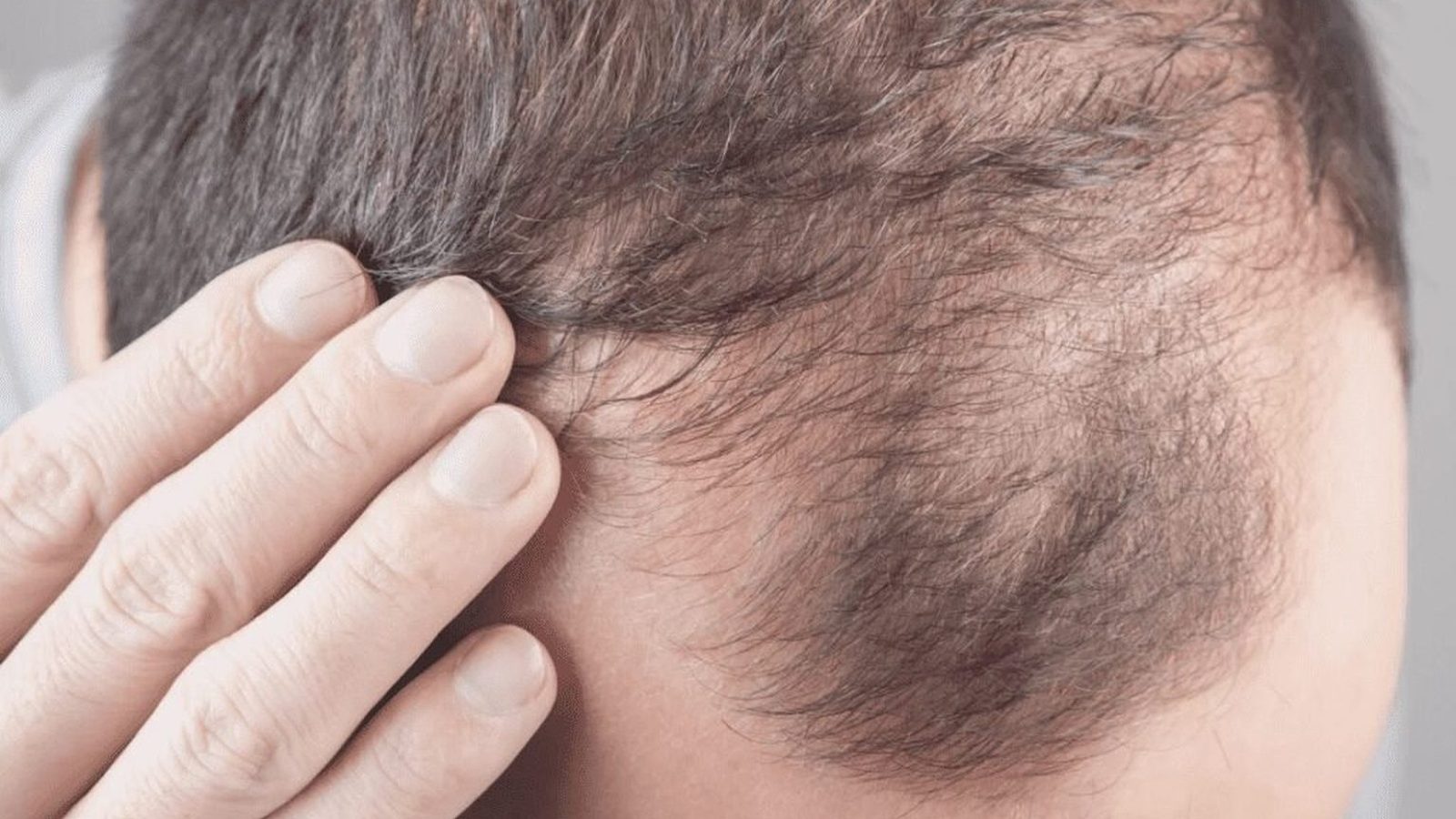
Yes, hair loss is a recognised side effect. The NHS lists hair loss among the common side effects of both tirzepatide (Mounjaro) and semaglutide (Wegovy, Ozempic). In most people it is temporary shedding set off by rapid weight loss, and hair usually regrows once weight and diet settle, although it can reveal pattern hair loss that will not.
Key takeaways
- The NHS lists hair loss as a common side effect of Mounjaro, Wegovy and Ozempic.
- A BMJ study published in July 2026 found a higher rate of alopecia in people with type 2 diabetes taking GLP-1 drugs than in those on two other diabetes medicines, but the absolute risk was low.
- The usual cause is telogen effluvium: shedding that starts 2 to 4 months after a trigger such as rapid weight loss and settles over 6 to 9 months in most cases.
- Do not stop or change your injections without speaking to your prescriber, and see your GP if the shedding worries you.
- A hair transplant cannot fix shedding. It only makes sense once weight is stable and any remaining loss is clearly pattern hair loss.
Does Mounjaro or Ozempic cause hair loss?
It can. Hair loss appears in the list of common side effects on the NHS pages for tirzepatide (Mounjaro) and for semaglutide (Wegovy and Ozempic), alongside nausea, constipation and tiredness.
The strongest new evidence came in July 2026, when The BMJ published a large study of adults with type 2 diabetes treated in one US health system between January 2019 and September 2024. The researchers compared people starting a GLP-1 receptor agonist (the drug class that includes semaglutide) with people starting two other types of diabetes medicine. According to the BMJ Group summary of the study, the GLP-1 group had a higher rate of alopecia in both comparisons:
| Comparison | GLP-1 group (cases per 1,000 person-years) | Comparison group (cases per 1,000 person-years) | Relative difference |
|---|---|---|---|
| GLP-1 drugs vs SGLT-2 inhibitors | 6.91 | 5.04 | 37% higher |
| GLP-1 drugs vs DPP-4 inhibitors | 6.53 | 3.89 | 68% higher |
A few points stop these numbers from being over-read:
- The absolute risk was low. Fewer than 7 cases per 1,000 person-years were recorded in the GLP-1 groups, and the authors themselves describe the absolute risk as low.
- It studied people with type 2 diabetes, not people using the higher weight-loss doses sold as Wegovy or Mounjaro for obesity.
- Results were for the whole drug class. The summary does not give separate figures for semaglutide or tirzepatide, so it cannot tell you whether one causes more hair loss than another.
- The records could not show how severe the hair loss was, how long it lasted, or whether it reversed after people stopped treatment. The authors also note that factors they could not measure may have played a part.
Why does rapid weight loss make hair fall out?
Losing weight quickly is a physical stress, and stress can push many growing hairs into their resting phase at the same time. A few months later those resting hairs fall out together. Dermatologists call this telogen effluvium.
Each hair follicle cycles between a long growing phase and a short resting phase. Normally only a small share of hairs rest at any one time, so daily shedding goes unnoticed. DermNet’s guide to telogen effluvium lists weight loss, unusual diets or nutritional deficiency, surgery, illness with fever and some medicines as known triggers, and says the shedding typically starts 2 to 4 months after the triggering event. That delay is why many people link the hair loss to their injections only once they are well into treatment.
The BMJ study authors give the same explanation. They note that rapid weight loss is a known trigger of hair shedding and can lead to iron or zinc deficiency, and that hormonal changes may also play a part. The NHS hair loss page separately lists weight loss and iron deficiency among the causes of temporary hair loss.
Weight-loss surgery offers a useful comparison. A 2021 review in Cureus describes hair loss after bariatric surgery as usually acute, starting within the first three or four months, while loss that begins after six months is more often linked to nutritional deficiency. Eating very little for a long time is a different problem from the initial shock of fast weight loss, and it is worth raising with your GP.
Will my hair grow back?
In most cases, yes. Telogen effluvium does not destroy follicles, so hair usually regrows once the trigger settles. The NHS says hair loss caused by a medical condition usually stops or grows back once you have recovered.
DermNet describes shedding that peaks and then tapers back to normal over 6 to 9 months in most cases, with regrowth once the trigger is removed. It also notes two exceptions worth knowing about:
- Chronic telogen effluvium, where shedding stays higher than normal for long periods, sometimes years.
- Unmasked pattern hair loss. A bout of shedding can reveal an underlying genetic tendency to male or female pattern hair loss. That part will not grow back by itself.
The new hairs start short, so your hair can look thin for a while even after the shedding has stopped. It is also worth being honest about the gaps in the evidence: the BMJ study could not measure whether hair loss on GLP-1 drugs reversed, so there are no reliable figures yet on how long recovery takes for people on these medicines specifically.
How do I tell shedding from pattern hair loss?
Shedding from weight loss tends to be sudden and spread across the whole scalp, while pattern hair loss is gradual and follows a typical shape. The table below sets out the usual differences, but only a clinician who examines your scalp can tell you which you have, and you can have both at once.
| Feature | Telogen effluvium (shedding) | Pattern hair loss |
|---|---|---|
| Onset | Fairly sudden, about 2 to 4 months after a trigger | Gradual, over months or years |
| Where | Diffuse thinning all over the scalp, never complete baldness | Men: temples, hairline and crown. Women: a widening parting and thinning at the front and crown |
| Gentle pull test | More hairs than usual come out | Usually not increased |
| Course | Settles over 6 to 9 months in most cases | Slowly progresses without treatment |
| Main approach | Find and manage the trigger | Medical treatment and, for some, surgery |
Sources for the table: DermNet, the NHS and the Primary Care Dermatology Society.
If you are not sure, see your GP. The NHS advises seeing a GP if you are worried about hair loss, and before going to a commercial hair clinic. Your GP can also decide whether a blood test, for example for iron levels, makes sense.
Should I wait before having a hair transplant?
Usually, yes. A transplant moves healthy follicles from the back of the scalp to thinning areas. It does not stop shedding, and planning surgery while your hair is still in flux makes it hard to judge how much you have really lost.
There are three practical reasons to wait until your weight has been stable for a while and the shedding has settled:
- Your true pattern only shows once shedding stops. Some apparent thinning may regrow on its own, and you would not want grafts placed in an area that was going to recover anyway.
- The donor area may be affected too. Telogen effluvium is diffuse, so the back and sides of the scalp can look thinner than they really are, which makes it harder for the doctor to plan a safe number of grafts.
- A transplant is a long project. On our own recovery timeline, transplanted hair sheds in weeks 2 to 6, new growth appears in months 3 to 4, density builds over months 6 to 9, and most of the result shows at 12 months, maturing to 18. Starting that clock while you are still shedding muddies the result.
When you are ready, a plan starts with four photos on WhatsApp (front, top, crown and back). The doctor reviews them and sends a written plan and price, with no deposit needed to get one. Tell the doctor about every medicine you take, including weight-loss injections. You can get a rough idea first with our graft and price estimator. For reference, our all-inclusive packages range from €1,599 to €6,000 for FUE and €2,300 to €5,060 for a hair transplant for women, depending on grafts and package.
In women, pattern hair loss usually shows as a widening parting and thinning at the front and crown rather than a bald patch, which can look a lot like diffuse shedding. If you are a woman losing hair on a GLP-1 medicine, get a diagnosis first. Our women’s hair transplant page explains who tends to be suitable.
What can I do now to protect my hair?
Keep taking your medicine as prescribed unless your prescriber says otherwise, eat well, and get a proper diagnosis if the shedding continues. There is no quick fix for telogen effluvium, but these steps help:
- Talk to your prescriber before changing anything. Do not stop or lower your dose on your own. Your GP, pharmacist or online prescriber can weigh the hair loss against the reasons you are taking the medicine.
- Report the side effect. Anyone in the UK can report a suspected side effect to the MHRA through the Yellow Card scheme.
- Eat a balanced diet. The NHS tirzepatide page advises a healthy, balanced diet while taking the medicine. With a smaller appetite it is easy to fall short, so ask your GP about iron and other checks rather than guessing with supplements.
- Treat pattern hair loss as a separate problem. If your GP confirms pattern hair loss, the NHS names finasteride and minoxidil as the main treatments for men. They do not work for everyone, they only work while you use them, and they are not all available on the NHS. Our guide to finasteride after a hair transplant covers the MHRA safety warnings.
- Give it time before judging. Because shedding usually settles over 6 to 9 months, take dated photos in the same light every month. They show the trend more honestly than the hairs in your brush, and they are useful if you later ask a doctor for an assessment.
Some people ask about PRP treatment for thinning hair. We include PRP in our Premium package as an add-on to surgery, not as a reason to travel on its own.
If your shedding has settled and you want to know whether a transplant could help, send four photos on WhatsApp to +44 7988 487 251 or use the contact page.
Frequently asked questions
Is hair loss from Mounjaro permanent?
Usually not. Most hair loss linked to rapid weight loss is telogen effluvium, a temporary shedding phase. The NHS says hair loss caused by a medical trigger usually stops or grows back once you have recovered, and DermNet says shedding tapers back to normal over 6 to 9 months in most cases. If your hair keeps thinning in a set pattern after that, ask your GP about pattern hair loss.
Does Wegovy cause more hair loss than Mounjaro?
There is no reliable head-to-head answer yet. The NHS lists hair loss as a common side effect of both semaglutide (Wegovy, Ozempic) and tirzepatide (Mounjaro). The 2026 BMJ study looked at GLP-1 drugs as a group in people with type 2 diabetes and did not report results for each medicine separately, so it cannot rank them.
How long after starting weight-loss injections does hair loss begin?
Shedding from telogen effluvium usually starts 2 to 4 months after the trigger, according to DermNet, so many people notice it a few months into treatment, once weight loss has picked up. Timing varies from person to person. If shedding starts suddenly, comes with patches or a sore scalp, or worries you, see your GP.
Should I stop my injections if my hair is falling out?
Do not stop or change your dose on your own. Speak to the GP, pharmacist or prescriber who supplies the medicine, because they can weigh the hair loss against the reasons you are taking it. You can also report the side effect to the MHRA through the Yellow Card scheme, which anyone in the UK can use.
Can I have a hair transplant while taking Mounjaro or Ozempic?
That is a decision for the operating doctor, who needs to know every medicine you take. In general it makes sense to wait until your weight is stable and any shedding has settled, so the doctor can see your true pattern of loss and the real density of your donor area. Our doctor reviews four photos before giving a written plan, so list every medicine you take when you send them.
Sources
- GLP-1 diabetes drugs linked to increased risk of hair loss (press release on Tang H et al., BMJ 2026;394:e100077), BMJ Group, 22 July 2026
- Tirzepatide (Mounjaro): side effects, NHS, reviewed 15 May 2026
- Semaglutide (Wegovy, Ozempic, Rybelsus): side effects, NHS, reviewed 15 May 2026
- Hair loss, NHS, reviewed 24 January 2024
- Telogen effluvium (hair shedding), DermNet, updated November 2019
- Cohen-Kurzrock RA, Cohen PR. Bariatric Surgery-Induced Telogen Effluvium (Bar SITE): case report and a review of hair loss following weight loss surgery. Cureus 2021;13(4):e14617, Cureus (via PubMed Central), April 2021
- Alopecia: male and female pattern alopecia, Primary Care Dermatology Society, updated 16 March 2025
- Yellow Card scheme, MHRA, accessed 30 October 2026
Written by our editorial team and checked against the sources listed, following our editorial policy. Last updated 30 October 2026. This article is general information and does not replace advice from a doctor who has examined you. Medically reviewed by