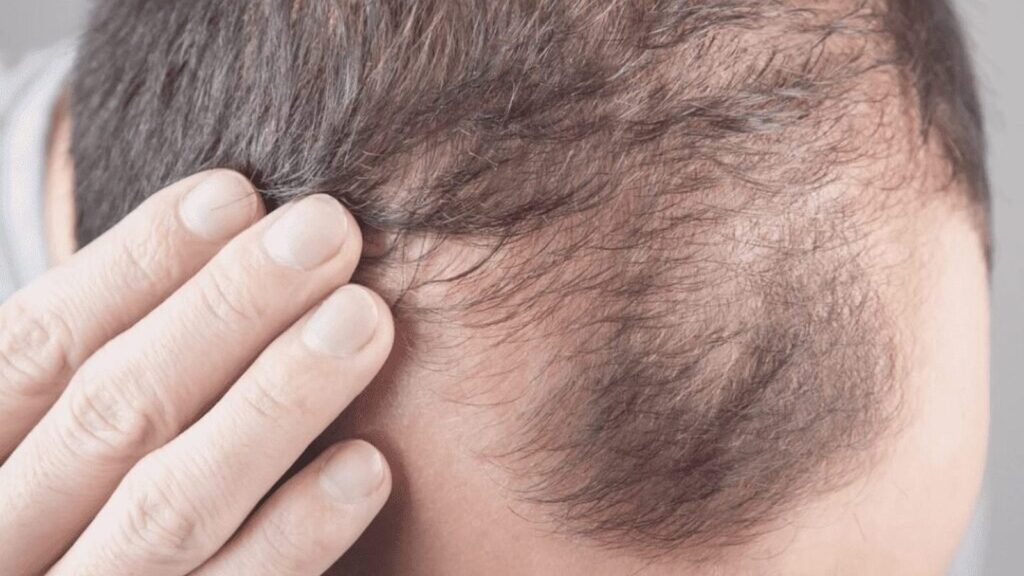
Hair falling out 2 to 6 weeks after a hair transplant is normal. The transplanted hair shafts shed while the follicles stay under the skin, rest, and start growing new hair around months 3 to 4. Some nearby native hair can also shed (shock loss), usually temporarily. Pain, spreading redness, pus or fever are different and need a doctor.
Key takeaways
- Shedding of transplanted hair shafts in weeks 2 to 6 is expected and does not mean the grafts have failed.
- Shock loss is shedding of existing hair near the grafts or in the donor area. It is most often temporary, but a review notes it can occasionally be permanent.
- New growth usually appears at months 3 to 4, density builds from months 6 to 9, and most of the result shows at 12 months, maturing to 18.
- Chronic folliculitis after a transplant is uncommon. Painful, hot, spreading or pus-filled spots need a doctor.
- Contact your clinic early with photos rather than waiting and worrying.
Why is my hair falling out after a hair transplant?
Because the transplanted follicles are resting after the move. The hair shafts that came with each graft fall out, but the follicle stays in the skin and produces a new hair once it restarts its growth cycle.
Every hair follicle cycles between a growing phase and a resting phase. Being removed, kept outside the body for a short time and placed in a new site is a shock to the follicle, and many switch to resting. When that happens, the old shaft is pushed out. It is the same process that causes shedding after illness or stress, which dermatologists call telogen effluvium.
A 2018 review of hair transplant complications in the Journal of Cutaneous and Aesthetic Surgery attributes shedding in the recipient area to anagen effluvium, telogen effluvium or a mix of the two. In plain terms, the hair stops growing or switches to resting, then falls out. The grafts are still there.
Shedding in weeks 2 to 6 is different from losing a graft in the first few days. If a graft comes out with bleeding early on, for example after a knock to the head, tell your clinic and send a photo.
When does shedding start and stop?
Most people notice shedding from about week 2, and it is usually over by about week 6. The review above gives the same window, saying shock loss in the recipient area typically begins 2 to 6 weeks after surgery.
Here is how the first weeks fit our own recovery timeline:
| Time after surgery | What you will usually see | What to do |
|---|---|---|
| Day 3 | Check-up and first wash at the clinic, then the flight home | Follow the washing routine and use the shampoo and lotion provided |
| About week 1 | Small crusts around each graft; most people return to desk work | Wash gently as instructed and do not pick |
| About day 10 | Crusts have fallen away | Keep washing as instructed |
| Weeks 2 to 6 | Transplanted hair shafts shed; some native hair may thin (shock loss) | Expect it; send photos if you are unsure |
| Months 3 to 4 | New, fine hairs start to appear | Be patient; growth is uneven at first |
| Months 6 to 9 | Density builds and hairs thicken | Compare against your day 1 photos |
| 12 to 18 months | Most of the result shows at 12 months and keeps maturing to 18 | Final review with your clinic |
For a fuller day-by-day picture, see our hair transplant recovery timeline.
What is shock loss, and is it permanent?
Shock loss is shedding of hair that was not transplanted: native hair near the grafts, or sometimes hair in the donor area. It is most often temporary, but it is not guaranteed to come back in every case.
The 2018 review says recipient-area shock loss is most often temporary but may sometimes cause a permanent reduction in native hair. It identifies a higher risk in women and in people with advanced miniaturisation, meaning native hairs that are already thin and weak from pattern hair loss.
In the donor area after FUE, the same review says shedding can appear from a few days to a few weeks after surgery and resolves within 3 to 4 months in most cases. It names over-harvesting and reduced blood supply as the most common causes, which is one reason a careful, evenly spread extraction matters.
Shock loss after a transplant is also recorded in the medical literature as a localised form of telogen effluvium. A 2018 case report in the Annals of Dermatology described two patients with hair loss after transplantation, whose scalp biopsies showed normal follicle numbers with more follicles in the resting phase. Both were reassured and monitored without treatment.
Some surgeons suggest medicines to reduce shock loss. The review mentions minoxidil started within two weeks of surgery, possibly with oral finasteride, while noting this as an approach rather than giving trial results. Medicines like these should only be started with your GP or prescriber; our article on finasteride after a hair transplant covers the MHRA safety warnings.
When will the new hair start to grow?
New hair usually starts to appear around months 3 to 4. It comes through fine and patchy at first, then thickens, and most of the result is visible at around 12 months.
Transplanted hair keeps the characteristics of the donor area. The StatPearls chapter on hair transplantation explains that because hair from the back of the scalp resists the hormones behind pattern hair loss, transplanted hairs keep their donor characteristics, including thickness. That is why grafts that shed in week 3 can grow back as permanent hair.
Some practical expectations:
- Growth is uneven. Some areas come through before others, so a patchy look at month 4 is not a verdict on the result.
- Early hairs start short and fine. They thicken as density builds over the following months.
- The final verdict comes later. Density builds over months 6 to 9, and hair keeps maturing up to 18 months. Judging the result before 12 months is premature.
Are spots or folliculitis normal?
An occasional small spot is worth mentioning to your clinic, but persistent folliculitis is uncommon. Spots that are painful, keep coming back or spread are not normal and should be checked by a doctor.
Folliculitis means inflamed hair follicles. The 2018 review describes chronic folliculitis after a transplant as uncommon, usually a reaction to poorly dissected hairs, and sometimes linked to poor hygiene or an existing skin condition. When it does happen, it says treatment may need antibiotics and daily cleansing with an antibacterial shampoo to prevent scarring. That treatment is for a doctor to decide, not something to self-prescribe.
Other things the review covers, which are rarer:
- Cysts: small lumps from grafts slipping under the skin or sitting on top of each other. They can be drained or treated by a doctor.
- Infection: the review describes infection as rare, at under 1%, and links it to poor hygiene, heavy crusting and medical risk factors.
- Necrosis: loss of skin in the centre of the scalp is rare but more likely in smokers, people with diabetes and after very large sessions.
When should I contact my clinic?
Contact your clinic whenever something worries you, and urgently if you have signs of infection or skin damage. Sending photos early costs nothing and is far better than waiting.
The joint minimum guidelines from BAHRS, BAAPS, BAPRAS and TSPRAS say a clinic should have systems to deal with complications during and outside working hours, including skin necrosis, infection, cysts and abnormal sensation (dysaesthesia), and to supply antibiotics where needed. We follow those guidelines, so these are exactly the things to tell us about.
Contact your clinic promptly if you notice:
- Pain, heat or swelling that is getting worse rather than better after the first few days.
- Redness that is spreading, or spots that are filling with pus or keep coming back.
- Dark, grey or black patches of skin in the recipient area.
- Lumps that are growing or painful.
- Numbness, burning or tingling that is not easing over the following weeks.
- No sign of any new growth by about month 6.
Do not wait for your clinic if you feel unwell. The NHS advice on cellulitis says to ask for an urgent GP appointment or call 111 if your skin is painful, hot and swollen, and to call 999 or go to A&E if you have a very high temperature, feel hot, cold or shivery, have a fast heartbeat or breathing, feel dizzy or confused, or notice purple patches on your skin. Tell the doctor you have had a hair transplant abroad.
All our packages include follow-up for 12 months, or 18 months with Premium. Patients can send photos on WhatsApp to +44 7988 487 251 at any stage, and the doctor reviews them. If you are still planning your procedure, a plan starts the same way: four photos on WhatsApp (front, top, crown and back), a doctor review, then a written plan and price. You can get an early idea with our graft and price estimator, or read how FUE works and how the grafts are taken. The home page explains what is included in every package.
Frequently asked questions
Is it normal to lose transplanted hair after two weeks?
Yes. Shedding of the transplanted hair shafts between weeks 2 and 6 is an expected part of recovery. The follicle stays under the skin and moves into a resting phase before it starts a new hair. On our timeline, new growth appears around months 3 to 4. Shedding at this stage does not mean the grafts have failed.
Can shock loss affect my native hair?
It can. Shock loss can affect existing hair near the transplanted area, and occasionally the donor area after FUE. A 2018 review describes it as most often temporary, with donor-area shedding usually recovering within 3 to 4 months. It notes a higher risk in women and in people whose native hair is already very miniaturised, and that a permanent reduction can sometimes occur.
Should I pick off scabs to speed things up?
No. Let crusts come away with the gentle washing routine your clinic gives you. On our timeline they fall away within about 10 days. Picking or scratching can pull out grafts in the first days and can irritate the skin, which raises the risk of spots and infection. Ask your clinic if crusts are still stuck after two weeks.
When will I see the final result of my hair transplant?
Not for a year or more. On our timeline new growth starts at months 3 to 4, density builds from months 6 to 9, and most of the result is visible at 12 months, with hair continuing to mature up to 18 months. Judge the result against your day 1 photos, not your week 6 mirror.
What should I send my clinic if I am worried?
Send clear, well-lit photos of the area that worries you, taken from the same angles each time, with a short note on when it started, whether it hurts, and any fever or other symptoms. Photos let the doctor compare progress. For our patients, the UK WhatsApp number is +44 7988 487 251, and follow-up is included for 12 months, or 18 months with Premium.
Sources
- Kerure AS, Patwardhan N. Complications in hair transplantation. J Cutan Aesthet Surg 2018;11(4):182-189, Journal of Cutaneous and Aesthetic Surgery (via PubMed Central), 2018
- Loh SH, Lew BL, Sim WY. Localized telogen effluvium following hair transplantation. Ann Dermatol 2018;30(2):214-217, Annals of Dermatology (via PubMed), April 2018
- Telogen effluvium (hair shedding), DermNet, updated November 2019
- Goldin J, Zito PM, Raggio BS. Hair Transplantation. StatPearls, StatPearls Publishing (via PubMed), updated 2 August 2025
- UK and Turkish medical associations unite to issue minimum guidelines for hair transplant surgery, BAAPS, BAHRS, BAPRAS and TSPRAS, 13 December 2023
- Cellulitis, NHS, reviewed 18 April 2024
- Alopecia: male and female pattern alopecia, Primary Care Dermatology Society, updated 16 March 2025
Written by our editorial team and checked against the sources listed, following our editorial policy. Last updated 30 October 2026. This article is general information and does not replace advice from a doctor who has examined you. Medically reviewed by