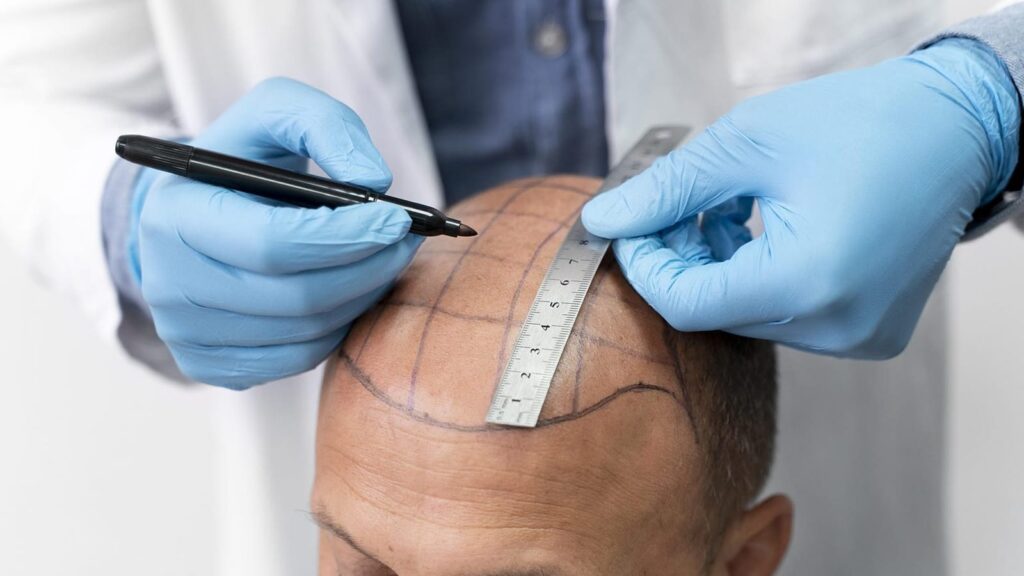
Turkey usually costs less, and packages bundle the hotel and transfers, while a UK clinic is easier to visit for consultations, follow-up and any complication. Either can be a sound choice if the doctor you meet plans and performs the surgical steps. The right answer depends on your budget, your health and how much aftercare you want close to home.
Key takeaways
- Price is the main reason people choose Turkey; distance from your clinic is the main trade-off.
- UK doctors answer to the GMC and clinics in England to the CQC. In Turkey, clinics treating international patients need a Ministry of Health authorisation certificate.
- In either country, ask who will make the incisions and implant the grafts: UK and Turkish surgeons’ associations say it should be a doctor.
- Agree before you travel how follow-up and complications will be handled once you are back in the UK.
- A UK clinic may suit you better if you have complex health conditions, want several face-to-face consultations, or cannot travel.
How much cheaper is Turkey than the UK?
It depends on the quotes you compare, but a Turkish package usually costs less and includes more of the trip. Our 2026 packages are €1,599 to €6,000 for FUE, €1,690 to €6,400 for DHI and €1,999 to €6,400 for Sapphire FUE, including hotel, VIP transfers, medication and 12 months of follow-up.
UK clinics set their own prices and usually quote for the procedure alone, so the only reliable comparison is your own: get written quotes for the same graft number, the same technique and the same areas. The NHS notes that surgery abroad may cost less but you should weigh the savings against the risks, and that is the right frame. The table sets out the practical differences.
| Factor | Our Antalya package | Typical UK clinic |
|---|---|---|
| Price | Fixed range in euros, confirmed in writing after a photo assessment | Set by each clinic, quoted in pounds |
| What the price covers | Surgery, anaesthesia and sedation, hotel, transfers, medication, aftercare products, follow-up | Usually the procedure and aftercare; travel and accommodation are your own |
| Consultation | Photo review by a doctor, then in person with the doctor on day 1 | Usually in person, at a clinic you can reach easily |
| Time away | About three days, with a four-hour flight each way | Surgery day plus travel to the clinic |
| Follow-up | 12 months (18 with Premium), mostly at a distance after you fly home | Usually in person |
| Who to complain to | The clinic’s complaints process and Turkish authorities | The clinic, then the GMC (doctors) or CQC (clinics in England) |
For a detailed breakdown of our prices, what is included and the costs to budget for, read how much a hair transplant in Turkey costs, or try the graft and price estimator.
Who regulates hair transplant clinics in the UK and in Turkey?
In the UK, doctors are regulated by the General Medical Council and clinics in England by the Care Quality Commission, with equivalent bodies in Scotland, Wales and Northern Ireland. In Turkey, the Ministry of Health licenses facilities, and those treating international patients need a health tourism authorisation certificate.
The UK and Turkish associations’ joint statement points out that UK patients can report poor care by doctors to the GMC and unregistered clinics to the CQC, and that this protection is not always available when you have treatment abroad. That does not mean Turkey is unregulated. HealthTürkiye, the government-backed health tourism portal, states that facilities and intermediaries offering services to international patients must receive an International Health Tourism Authorization Certificate. The Ministry of Health publishes lists of authorised hospitals, medical centres and private practices, and a new regulation published in the Official Gazette on 26 April 2025 tightened the rules for intermediaries that arrange treatment for foreign patients.
There is one more difference worth knowing. The Foreign Office says it cannot usually help if you have issues with the care received or costs involved after travelling abroad for treatment, because planned treatment is a commercial arrangement. So the clinic’s own complaints process, and your written agreement with it, matter more abroad than at home.
Will a doctor do my surgery, or a technician?
That depends on the clinic, not the country, so ask directly in writing. The UK and Turkish associations say a doctor should perform the surgical steps, and that you should be told at your first consultation if a technician will make incisions or implant grafts.
A hair transplant has three surgical stages: removing grafts from the donor area, opening the channels or incisions where they will go, and implanting them. The joint guidelines state that complications are reduced when the surgical steps are performed by a doctor rather than a technician. The ISHRS goes further, saying that any procedure that cuts the scalp is a surgical act and should be carried out by a licensed, trained physician.
The ISHRS also reports that 59% of its members said there are black-market hair transplant clinics in their cities, which it describes as clinics where technicians illegally perform surgery. That problem is not confined to Turkey; it is why the same question applies to any clinic you consider. At our clinic you meet the operating doctor, who draws your hairline with you on day 1, and the doctor performs the surgical steps.
What aftercare will I get once I’m back in the UK?
With a Turkish clinic, most aftercare happens remotely after you fly home, so ask exactly what follow-up includes before you book. Our packages include 12 months of follow-up, or 18 months with Premium, plus medication, shampoo and lotion for the first stage of healing.
The NHS is candid about the gap here: it warns that overseas clinics may not provide follow-up treatment, or may not provide it to the same standard as in the UK, and may not have a UK-based professional you can contact. Questions it suggests asking include what happens if there are complications, where follow-up appointments take place and how easily you can return to the clinic.
In practice, good remote aftercare means a named way to reach the team, a clear schedule for sending progress photos, and a doctor who reviews them. Our UK WhatsApp number is +44 7988 487 251 and the team speaks English among seven languages. The Foreign Office also suggests you discuss your plans with your UK doctor before committing, which is sensible: your GP knows your medical history and can help with general problems after you return. Our recovery timeline explains what is normal week by week.
What if I have a complication after I fly home?
Contact the clinic first with clear photos, and get local medical help straight away for anything urgent, such as spreading redness, fever or severe pain. Agree how the clinic handles complications before you pay, not after.
The joint guidelines say a clinic should have systems to deal with complications both during and outside working hours, including skin necrosis, infection, cysts and dysaesthesia, and the supply of antibiotics. Most problems after a hair transplant are minor. A 2026 review of FUE complications found that postoperative infection is rare, with most studies reporting an incidence below 1%, while folliculitis, an inflammation of the hair follicles, is among the most frequently reported issues and usually settles without lasting effects.
Know where you stand with the NHS. In an emergency you can use NHS services as normal. For anything cosmetic, the NHS says that cosmetic surgery is not routinely provided on the NHS, so a revision or repair would usually be private. Insurance is the other gap: the Foreign Office warns that standard travel insurance does not normally cover you if you travelled abroad for elective surgery.
If a result disappoints you once it has fully grown in, a repair is sometimes possible. Our guide to fixing a botched hair transplant and the hair transplant repair page explain the options.
Who is better off choosing a UK clinic?
A UK clinic is often the better choice if you need close medical coordination, want several face-to-face consultations, or cannot travel or take the time away. Turkey suits people who are comfortable travelling, want a lower all-inclusive price and are happy with remote follow-up.
You may be better off in the UK if:
- You have health conditions that your own specialists need to be involved in, or you take medicines that need careful management around surgery.
- You want two consultations in person before deciding, as the NHS recommends for cosmetic surgery, with a cooling-off period, normally 2 weeks in the UK.
- You cannot fly, or travel would be difficult for you soon after a procedure.
- You would feel more comfortable being able to walk into the clinic for every check-up.
Before choosing either, make sure a transplant is the right step. The NHS points out that some hair loss is temporary, for example after illness, stress or weight loss, while male and female pattern baldness is permanent. A doctor should confirm the cause and the pattern before planning surgery. If you are unsure whether you could get treatment through the NHS, read can you get a hair transplant on the NHS?
If you would like a doctor’s view on your own hair, send four photos on WhatsApp (front, top, crown and back). You will receive a written plan and price with no deposit, and you can compare it with any UK quote before you decide. You can also reach us through the contact page.
Frequently asked questions
Is a hair transplant in Turkey lower quality than in the UK?
Not as a rule. Quality depends on the doctor, the team, the planning and the aftercare, not on the country. There are excellent and poor clinics in both. Check who will perform the surgical steps, whether you will meet that doctor, whether the clinic is licensed and how complications are handled, and compare those answers rather than the flag.
Can I meet the doctor before I travel to Turkey?
Your first step is remote: a doctor reviews your four photos and you receive a written plan and price, and you can ask questions on WhatsApp. You meet the operating doctor in person on day 1 in Antalya, for your consultation and hairline drawing, before the procedure on day 2. You have time to review the plan before you pay.
Will my GP help after a hair transplant abroad?
Your GP can help with general medical problems and knows your history, which is why the Foreign Office suggests discussing your plans with your UK doctor before you go. Questions about the transplant itself, such as graft healing or growth, are best sent to the clinic that operated, with clear photos, so the doctor who planned your surgery can review them.
Does the NHS pay for hair transplants?
Rarely. The NHS says cosmetic surgery is not routinely provided and most people pay privately, though it may occasionally be funded for psychological or other health reasons. Some hair loss treatments may also not be available on the NHS. Our separate guide explains the exceptions and what your GP can offer.
How many trips to Turkey do I need?
For most people, one. The core trip lasts three days: consultation and hairline drawing on day 1, the procedure on day 2, and a check-up and first wash on day 3 before you fly home. Follow-up for 12 months, or 18 months with Premium, is then arranged remotely.
Sources
- Cosmetic surgery abroad, NHS, reviewed 14 December 2022
- UK and Turkish Medical Associations Unite to Issue Minimum Guidelines for Hair Transplant Surgery, British Association of Aesthetic Plastic Surgeons (BAAPS), 13 December 2023
- Certificated health service providers, HealthTürkiye (USHAŞ), undated
- Healthcare providers authorized by the Ministry, Republic of Türkiye Ministry of Health, Health Tourism Department, 20 August 2026
- Major changes to Turkey’s medical tourism sector: 2025 regulatory update, The Legal 500, 2025
- In hospital abroad: going abroad for medical treatment and planned elective surgery, Foreign, Commonwealth and Development Office, GOV.UK, updated 7 June 2024
- Fight the Fight: black-market hair transplants, International Society of Hair Restoration Surgery (ISHRS), undated
- New Survey Finds Younger Adults, More Women Seeking Treatment for Hair Loss (2025 Practice Census), International Society of Hair Restoration Surgery (ISHRS), 13 May 2025
- Complications in follicular unit excision hair transplantation: current evidence and practical approaches (Romera de Blas C et al.), Frontiers in Medicine (PubMed Central), 3 February 2026
- Is cosmetic surgery available on the NHS?, NHS, reviewed 17 April 2023
- Hair loss, NHS, reviewed 24 January 2024
Written by our editorial team and checked against the sources listed, following our editorial policy. Last updated 30 October 2026. This article is general information and does not replace advice from a doctor who has examined you. Medically reviewed by